Secret Weapon for High-End Silicone Materials: Why Potassium-Synthesized Vinyl Silicone Oil Has Become the New Industry Standard - Vinyl Terminated Silicone Fluid factory
Vinyl Terminated Silicone Fluid
Information Center
Everything you need to know about our products and company
In the field of modern polymer materials, silicone oil boasts outstanding heat resistance, weather resistance, electrical insulation and chemical stability. It is widely used in electronics, medical care, daily chemicals, textiles, new energy and many other industries. Among various types, vinyl silicone oil synthesized via the potassium process has attracted extensive industry attention thanks to its advanced manufacturing technology and superior comprehensive performance.
Conventional Technology vs. Innovation: An Overview of the Potassium Synthesis Process
Vinyl silicone oil is mainly synthesized via acid catalysis and alkali catalysis. The acid process has gradually faded out of the high-end market due to drawbacks including excessive by-products, dark color and broad molecular weight distribution.
The potassium process is an advanced route within the alkali catalysis system. It adopts organopotassium compounds as catalysts to produce target products through ring-opening polymerization and equilibrium reactions.
Core Advantages of the Potassium Process
Compared with the traditional acid process and other synthesis routes, vinyl silicone oil made by the potassium process has prominent technical merits:
High catalytic efficiency, mild reaction conditions and minimal by-product generation.
Narrow molecular weight distribution and stable batch consistency.
Pale color, high transparency, low residual content and odor-free property.
Wide Application Coverage: Ubiquitous Applications from Electronic Encapsulation to Medical Healthcare
Benefiting from high purity and high reactivity, potassium-process vinyl silicone oil delivers excellent performance across numerous high-end sectors:
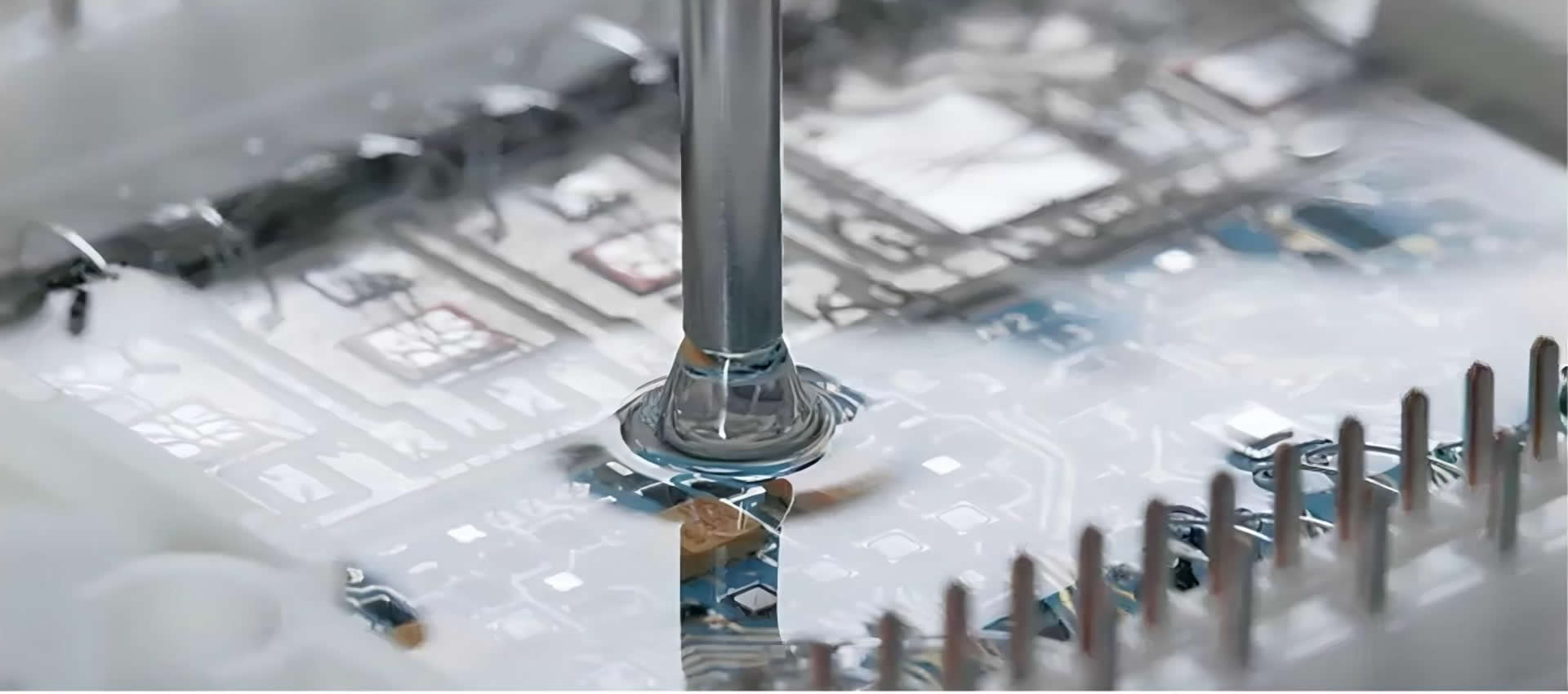
Electronics & Electrical Appliances: Serves as the key raw material for LED encapsulants and chip potting compounds, endowing finished products with excellent light transmittance and thermal stability.
Medical & Healthcare: Applied in silicone gel dressings and implant-grade silicone rubber with favorable biocompatibility and high safety.
New Energy: Incorporated into encapsulation materials for photovoltaic modules to improve anti-aging performance and extend service life.
A Comprehensive Analysis
Understanding Vinyl Terminated Silicone Fluid
Vinyl Terminated Silicone Fluid represents a specialized category of silicone polymers characterized by vinyl groups (-CH=CH₂) at the molecular chain terminals. This unique chemical structure enhances its reactivity, making it particularly valuable for various industrial applicati.
In the highly demanding field of electronic component manufacturing, material selection plays a decisive role in determining product reliability, performance, and longevity. From encapsulants and adhesives to potting compounds and conformal coatings, silicone-based materials have become indispensable due to their exceptional thermal stability, electrical i.
In the realm of high-performance industrial materials, Vinyl Terminated Fluid stands out as a transformative solution that bridges the gap between versatility and reliability. This specialized silicone derivative, characterized by its reactive vinyl groups along the polymer chain, has redefined possibilities across sectors ranging from precision electronic.
Vinyl Terminated Silicone Fluid: The Catalyst-Driven Material Revolutionizing High-Performance Applications
Unlocking the Chemical Potential of Vinyl Terminated Silicone Fluid
Vinyl terminated silicone fluid has emerged as a pivotal material across industries from medical devices to advanced electronics, but its true potential is only realized throug.
Vinyl terminated silicone fluid is a versatile material widely used in industries ranging from electronics to automotive manufacturing. Its unique properties—such as thermal stability, chemical resistance, and excellent adhesion—make it indispensable for applications like sealing, lubrication, and protective coatings. If you’re searching for reliable suppl.
How to Determine the Optimal Viscosity for Vinyl Terminated Silicone Fluid in Your Application
Selecting the right viscosity for vinyl terminated silicone fluid (VTMSF) is critical to achieving performance, cost-efficiency, and compatibility in diverse industrial and consumer applications. This guide explores key factors influencing viscosity selection.
Understanding the Chemical Resistance of Vinyl Terminated Silicone Fluid: A Comprehensive Guide
Vinyl terminated silicone fluid, a versatile polymer widely used in industries ranging from electronics to automotive manufacturing, is renowned for its adaptability and durability. One of its most critical properties—resistance to chemicals—plays a pivotal .
In the manufacturing of high-performance sealing components, the selection of raw materials is not just a procurement decision—it is a critical engineering choice that determines product longevity, reliability, and performance under demanding conditions. When it comes to sealing rings used in automotive, industrial machinery, medical devices, and electrica.
How to Determine the Volatility Profile of Vinyl-Terminated Silicone Fluids
Vinyl-terminated silicone fluids are critical components in industries ranging from coatings and adhesives to cosmetics and electronics. Their volatility directly impacts product stability, application performance, and long-term durability. Accurately measuring this property re.
Understanding the Role of Vinyl-Terminated Silicone Fluid in Electronic Encapsulation
In the fast-evolving field of electronics manufacturing, protecting sensitive components from environmental stressors is critical. One material that has gained prominence for its versatility and performance is vinyl-terminated silicone fluid. This specialized polymer.
Vinyl Terminated Silicone Fluid: A Versatile Solution for Modern Cosmetics and Personal Care
In the ever-evolving world of cosmetics and personal care, ingredients must balance safety, efficacy, and performance. Vinyl Terminated Silicone Fluid (VT-Si) has emerged as a standout choice, offering unique properties that cater to diverse formulation needs.
Understanding Moisture Interaction with Vinyl-Terminated Silicone Fluid
Vinyl-terminated silicone fluid, a specialized derivative of polydimethylsiloxane (PDMS), is widely recognized for its unique chemical and physical properties. One of the most critical questions users ask is whether this material absorbs moisture. Let’s delve into its moisture-rela.
Vinyl terminated silicone fluid (VT-SF) has emerged as a critical material in industries ranging from electronics to medical devices, offering exceptional thermal stability, chemical resistance, and compatibility with diverse systems. As global regulations tighten and performance demands escalate, adherence to industry standards becomes paramount. This art.
In today’s rapidly evolving industrial landscape, materials that deliver exceptional performance, adaptability, and reliability are driving innovation across sectors. Among these advanced materials, vinyl silicone fluid stands out as a versatile and transformative solution, enabling breakthroughs in industries ranging from electronics and automotive .
Essential Certifications for Vinyl Terminated Silicone Fluid Production
Vinyl Terminated Silicone Fluids are critical components in industries ranging from medical devices to industrial lubrication. To ensure product safety, regulatory compliance, and performance reliability, manufacturers must adhere to stringent quality certifications. Below is a com.
Global Regulatory Landscape for Vinyl Terminated Silicone Fluid: Compliance and Applications
The use of Vinyl Terminated Silicone Fluid (VT-SF) is subject to a complex framework of international regulations and industry standards designed to ensure safety, quality, and environmental protection. As a key material in sectors ranging from medical devices.
How to Dilute Vinyl Terminated Silicone Fluid for Optimal Application Results
Vinyl Terminated Silicone Fluid is a versatile material widely used across industries for its exceptional properties, including heat resistance, flexibility, and durability. Proper dilution is crucial to achieving the desired consistency for specific applications while maintai.
How Vinyl Terminated Silicone Fluid Enhances Polymer Flexibility in Industrial Applications
Vinyl Terminated Silicone Fluid has emerged as a revolutionary polymer modifier capable of dramatically enhancing the flexibility and performance characteristics of various industrial materials. This specialized silicone fluid, characterized by reactive vinyl gro.
Vinyl Terminated Silicone Fluid: Stability and Reactivity with Air and Moisture
Understanding Vinyl Terminated Silicone Fluid’s Chemical Stability
Vinyl Terminated Silicone Fluid, also known as vinyl-terminated polydimethylsiloxane (VI PDMS), demonstrates exceptional stability when exposed to air and moisture under normal storage conditions. Th.
Vinyl Terminated Silicone Fluid (VT Silicone Fluid) is a cornerstone material in industries ranging from electronics to medical devices, offering exceptional thermal stability, chemical resistance, and compatibility with diverse applications. If you’re seeking a free sample to evaluate its performance in your processes, here’s a comprehensive guide to se.
Regulatory Shifts Reshaping the Vinyl Terminated Silicone Fluid Industry
The production and application of vinyl terminated silicone fluid are undergoing significant transformation as new environmental regulations redefine global market dynamics. These high-performance materials, renowned for their thermal stability and chemical resistance, now face bo.
Vinyl Terminated Silicone Fluid: Enabling Next-Generation 3D-Printed Electronics
The Convergence of Material Science and Additive Manufacturing
In the rapidly evolving field of 3D-printed electronics, vinyl terminated silicone fluid has emerged as a critical material that bridges the gap between precision manufacturing and functional performance. Thi.
Asia-Pacific Drives Global Silicone Fluid Market: An In-Depth Look at China’s Manufacturing Surge
The Asia-Pacific regionhas emerged as the dominant force in the global vinyl terminated silicone fluid market, with China’s manufacturing prowess serving as the primary catalyst. This versatile material, characterized by its reactive vinyl end g.
Vinyl Terminated Silicone Fluid: Ensuring Signal Integrity in Next-Generation 5G Infrastructure
The rapid global deployment of 5G networks represents a transformative leap in communication technology, enabling unprecedented data speeds, ultra-low latency, and massive device connectivity. However, this technological advancement comes with significant mat.
Vinyl Terminated Silicone Fluid: The Modern Choice for Skin-Friendly Cosmetics
Introduction
In the evolving world of cosmetic science, vinyl terminated silicone fluids have emerged as sophisticated ingredients that combine performance with skin compatibility. These specialized silicone polymers, characterized by reactive vinyl groups at both ends of .
Global Market for Vinyl Terminated Silicone Fluid Poised for Significant Growth, Driven by Multi-Industry Demand and Innovation
The global market for vinyl terminated silicone fluid (VTSF) is projected to experience substantial growth, with its value expected to reach approximately US $3.2 billion by 2030. This growth is fueled by the material’s e.
Pharmaceutical Innovations with Vinyl Terminated Silicone Fluid: Advancing Drug Delivery Systems
Introduction
The pharmaceutical industry continuously seeks innovative materials that can enhance drug delivery efficacy and patient outcomes. Among these materials, vinyl terminated silicone fluids have emerged as a versatile polymer with unique proper.
Vinyl Terminated Silicone Fluid: Navigating EU REACH Compliance for Global Market Access
Understanding Vinyl Terminated Silicone Fluid
Vinyl terminated silicone fluid, also known as vinyl-terminated polydimethylsiloxane (Vi-PDMS), is a specialized organosilicone compound featuring reactive vinyl groups (-CH=CH₂) at both ends of the polymer chain. Thi.
Tackling Industrial Coating Emissions: Why Vinyl-Terminated Silicone Fluids Are the Sustainable Choice
In industrial coatings, balancing performance with environmental responsibility has never been more critical. As global regulations tighten on volatile organic compound (VOC) emissions—linked to air pollution and health risks—formulators are scrambling.
Vinyl functional silicone oil is an organosilicon polymer with a siloxane bond backbone and vinyl groups on its side chains, serving as a critical modifier in the synthetic rubber sector. It is generally a colorless or pale yellow transparent liquid with outstanding thermal stability, chemical inertness and flexibility. Widely used for formulation optimiza.
Reaction Principle
Vinyl silicone oil acts as the base polymer of LSR. Its pendant/terminal vinyl groups (Si-CH=CH₂) undergo platinum-catalyzed hydrosilylation addition reaction with Si-H bonds on hydrogen-containing silicone oil. Crosslinking occurs without small molecular byproducts, enabling curing under room temperature or heating conditions. Vinyl .
Sustainable Manufacturing of Vinyl Terminated Silicone Fluid: Eco-Friendly Production Processes
Vinyl terminated silicone fluid (VT-SF), also known as vinyl-terminated polydimethylsiloxane, represents a specialized category of organosilicon compounds featuring reactive vinyl groups (-CH=CH₂) at both molecular terminals. This unique chemical structure pr.
R&D Driven by Market Pain Points: Resolving the Dilemma of High Cyclic Content
It is known that high cyclic content contained in conventional vinyl silicone oil not only necessitates energy-intensive secondary vulcanization, but its volatility also impairs the performance of downstream products. Worse still, such products struggle to comply with env.
The Future of Sustainable Silicone Technology: Vinyl Terminated Silicone Fluid Innovations
Market Dynamics and Growth Trajectory
The global silicone fluids market is experiencing robust growth, with the vinyl terminated silicone fluid segment positioned at the forefront of this expansion. According to market research, the silicone fluids market was v.
Vinyl terminated silicone fluid (ViPDMS) represents a specialized class of organosilicon compounds characterized by reactive vinyl groups (-CH=CH₂) at both ends of the polydimethylsiloxane molecular chain. This unique chemical structure, with the formula CH₂=CH-Si(CH₃)₂O[(CH₃)₂SiO]ₙ(CH₃)₂Si-CH=CH₂, provides exceptional versatility across industrial applica.
The electronics industry is increasingly adopting vinyl terminated silicone fluid as a cornerstone material for protecting sensitive components from moisture, dust, and environmental stress. This specialized polymer has become indispensable for waterproof encapsulation solutions thanks to its unique combination of electrical and mechanical properties tha.
Vinyl Terminated Silicone Fluid: Advancing Wind Turbine Performance and Reliability
The global transition toward renewable energy has intensified the demand for advanced materials that enhance the efficiency and durability of clean energy technologies. Among these, vinyl terminated silicone fluid has emerged as a critical component in wind energy applic.
In the realm of high-performance materials, low molecular weight vinyl-terminated silicone fluid (VTSF) has emerged as a critical component for precision coatings, combining exceptional reactivity with tailored physical properties. Its unique molecular architecture—featuring reactive vinyl end groups on a flexible siloxane backbone—enables formulators to d.
Solving Volatility Challenges in Medical Device Manufacturing: The Rise of Advanced Vinyl-Terminated Silicone Fluids
For medical device engineers and manufacturers, selecting materials that balance performance, safety, and regulatory compliance is a constant balancing act. Among the critical considerations? Volatility. High-volatility silicones can com.
Vinyl Terminated Silicone Fluid: Revolutionizing Thermal Management in EV Batteries
Introduction
The rapid evolution of electric vehicles has brought battery thermal management to the forefront of automotive engineering challenges. As EV manufacturers strive for greater range, faster charging, and enhanced safety, the limitations of conventional ther.
Vinyl termified silicone fluids represent a specialized class of medical-grade materials engineered for advanced healthcare applications. These reactive fluids feature terminal vinyl groups that enable precise molecular customization and controlled crosslinking capabilities, making them ideal for developing implantable devices, drug delivery systems, and d.
Vinyl silicone fluid is revolutionizing cosmetic and personal care formulations through its unique reactive properties and sensory enhancement capabilities. This functional silicone material features terminal vinyl groups that enable customizable cross-linking while maintaining the characteristic smoothness of silicone-based ingredients.
Vinyl sili.
Vinyl silicone fluid, as a core functional silicone product, demonstrates exceptional versatility and reliability in the industrial additives sector. Its unique molecular structure combines the flexibility of a siloxane backbone with the reactivity of terminal vinyl groups, delivering customized solutions for various industrial applications.
In polymer .
Vinyl terminated fluid is emerging as a transformative additive in textile and leather manufacturing, offering a unique combination of processing enhancement and performance optimization. This reactive silicone fluid leverages its terminal vinyl groups to create durable molecular bridges with fibers and leather substrates, delivering lasting functional ben.
Contact Us
We're here to help with any questions or inquiries you may have
Contact Information
Address
No. 116, Jiangdong Street, Yiwu City, Jinhua City, Zhejiang Province,China