Understanding Industry Standards for Vinyl Terminated Silicone Fluid: Compliance, Performance, and Applications - Vinyl Terminated Silicone Fluid factory
Vinyl Terminated Silicone Fluid
Information Center
Everything you need to know about our products and company
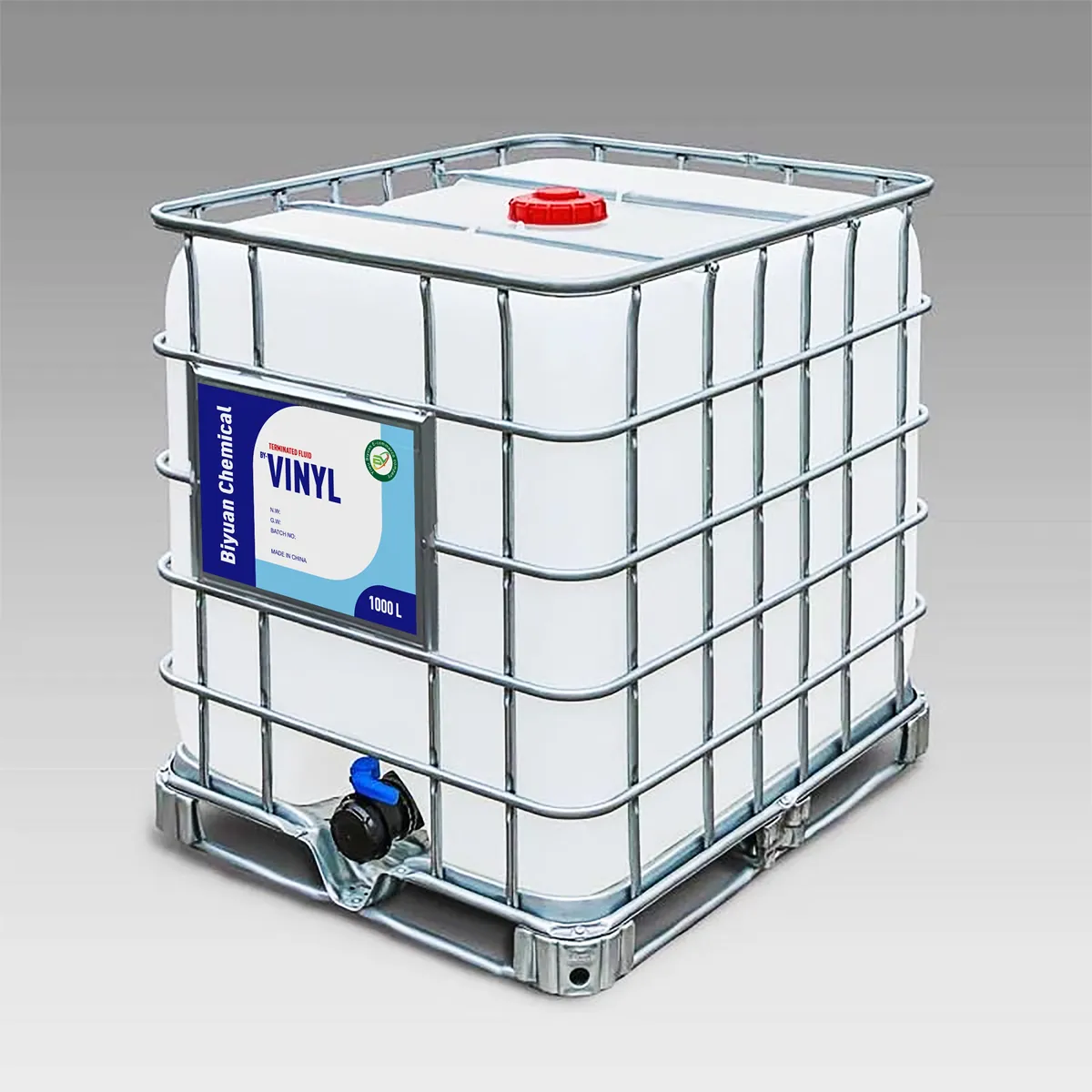
Vinyl terminated silicone fluid (VT-SF) has emerged as a critical material in industries ranging from electronics to medical devices, offering exceptional thermal stability, chemical resistance, and compatibility with diverse systems. As global regulations tighten and performance demands escalate, adherence to industry standards becomes paramount. This article explores the key standards governing VT-SF, technical specifications, and applications, while highlighting how leading manufacturers like Biyuan deliver compliant, high-performance solutions.
1. Global Standards for Vinyl Terminated Silicone Fluid
ISO Standards
ISO 10993 Series: These standards address biocompatibility for medical applications, ensuring VT-SF used in implants or diagnostic equipment meets stringent cytotoxicity, sensitization, and hemocompatibility requirements .
ISO 8009: Specifies durability and mechanical performance for reusable silicone components, critical for automotive and aerospace seals exposed to thermal cycling .
ASTM Standards
ASTM D2000: Classifies silicone fluids by resistance to heat, oil, and chemicals. VT-SF variants often fall under “Class M” (high-temperature stability) or “Class B” (ozone resistance) .
ASTM D4559: Measures volatile content in silicone fluids, ensuring stability during high-temperature processing .
Regional Regulations
EU REACH/ROHS: Restricts hazardous substances like phthalates and cadmium, requiring VT-SF suppliers to provide full chemical compliance reports .
China GB/T 28610: Mandates mechanical properties (e.g., tensile strength, elongation) for silicone rubber materials, impacting VT-SF used in industrial seals .
2. Technical Specifications Driving Quality
Key Performance Metrics
Viscosity Range: VT-SF typically ranges from 50 to 10,000 cSt, with higher viscosity grades (e.g., 5,000–10,000 cSt) preferred for high-pressure systems .
Thermal Stability: Certified to withstand continuous use at -60°C to +300°C, with short-term exposure up to +350°C in aerospace applications .
Chemical Resistance: Resists oils, fuels, and solvents per ASTM D471, crucial for automotive and energy sectors .
Certifications for Critical Industries
Medical: ISO 13485 compliance ensures traceable manufacturing and sterility for VT-SF in catheters or implantable devices .
Food Processing: FDA 21 CFR 177.2600 certification guarantees non-toxicity and migration safety in packaging seals .
3. Applications Requiring Standardized VT-SF
Aerospace & Defense
Fuel System Seals: VT-SF’s fuel resistance (per ASTM D1418) prevents leaks in jet engines, validated under NORSOK standards .
Sustainability: Biyuan’s REACH-compliant VT-SF reduces environmental impact while maintaining performance, aligning with EU Green Deal goals .
5. Future Trends & Procurement Considerations
Smart Manufacturing: Integration of IoT sensors for real-time viscosity monitoring ensures compliance with ISO 9001:2015 .
Circular Economy: Suppliers like Biyuan adopt closed-loop production, minimizing waste and supporting ISO 14001 certification .
Regional Adaptation: For markets like Africa and South America, prioritize VT-SF with extended shelf life (≥12 months) and rapid customization .
Conclusion
Vinyl terminated silicone fluid’s versatility hinges on rigorous adherence to ISO, ASTM, and regional standards. Brands like Biyuan exemplify how combining technical precision with regulatory compliance drives innovation across industries. For businesses seeking reliable, future-ready VT-SF solutions, partnering with standards-driven manufacturers ensures operational excellence and long-term value.
Optimize your supply chain with Biyuan’s ISO-certified VT-SF—engineered for resilience, compliance, and unmatched performance.
Vinyl Terminated Silicone Fluid (VT-SF) has become an indispensable material across industries from aerospace and electronics to medical devices and automotive manufacturing. Its unique chemical structure, featuring reactive vinyl groups (-CH=CH₂) at the molecular terminals, enables exceptional thermal stability, flexibility, and customization potential. H.
Vinyl terminated silicone fluid is a versatile material widely used in industries ranging from electronics to automotive manufacturing. Its unique properties—such as thermal stability, chemical resistance, and excellent adhesion—make it indispensable for applications like sealing, lubrication, and protective coatings. If you’re searching for reliable suppl.
A Comprehensive Analysis
Understanding Vinyl Terminated Silicone Fluid
Vinyl Terminated Silicone Fluid represents a specialized category of silicone polymers characterized by vinyl groups (-CH=CH₂) at the molecular chain terminals. This unique chemical structure enhances its reactivity, making it particularly valuable for various industrial applicati.
Vinyl Terminated Silicone Fluid (VTMSF) is a cornerstone material in industries ranging from electronics to healthcare, but its formulation and performance vary significantly between industrial and medical applications. Understanding these distinctions is critical for selecting the right grade to meet safety, regulatory, and functional requirements. Below,.
Optimal Storage Conditions for Vinyl Terminated Silicone Fluid: A Comprehensive Guide
Understanding Vinyl Terminated Silicone Fluid
Vinyl Terminated Silicone Fluid, chemically known as vinyl-terminated polydimethylsiloxane (CAS No. 68083-19-2), is a reactive silicone polymer characterized by vinyl groups at both molecular chain ends. This unique stru.
Understanding the Chemical Composition of Vinyl Terminated Silicone Fluid
Vinyl terminated silicone fluid, a versatile polymer widely used in industrial and consumer applications, derives its functionality from its unique molecular architecture. This article delves into its chemical structure, properties, and applications, while highlighting industry-l.
Understanding the Flash Point of Vinyl Terminated Silicone Fluid: Safety, Applications, and Industry Insights
Vinyl terminated silicone fluids are widely recognized for their versatility in industrial applications, from lubricants to sealants. A critical property that ensures their safe handling and performance is the flash point—a parameter that dete.
In the sophisticated domain of polymer engineering, achieving exact mechanical properties, thermal resilience, and application-specific performance requires foundational components with precise molecular architecture. For formulators of addition-cure systems—from liquid silicone rubbers (LSR) and high-consistency rubbers (HCR) to specialty gels, adhesives,.
In the sophisticated field of polymer engineering, the journey from raw materials to high-performance elastomers begins with molecular-level decisions. For formulators developing addition-cure systems—from medical-grade gels and flexible adhesives to durable seals and high-temperature composites—the selection of the primary reactive polymer is more than a .
Vinyl terminated silicone fluid is a cornerstone material in industries requiring high-performance thermal management, from aerospace seals to medical device coatings. Ensuring its thermal stability is critical for applications exposed to extreme temperatures. This article dives into proven methodologies, key evaluation criteria, and industry best practice.
Signs of Degraded Vinyl Terminated Silicone Fluid and How to Address Them
Vinyl Terminated Silicone Fluid is a critical material in industries ranging from medical devices to automotive manufacturing, prized for its thermal stability, flexibility, and chemical resistance. However, degradation can compromise its performance, leading to equipment failure.
How Vinyl Terminated Silicone Fluids Are Engineered: The Role of Catalysts in Performance Optimization
Vinyl terminated silicone fluids are pivotal in industries ranging from medical devices to advanced electronics, offering exceptional thermal stability, flexibility, and chemical resistance. A critical question arises: Does their production involve c.
Vinyl Terminated Silicone Fluid is a versatile material widely used in industries like adhesives, sealants, and coatings due to its excellent thermal stability and crosslinking capabilities. For businesses sourcing this product, delivery timelines are critical to maintaining production schedules and meeting client demands. Here’s a detailed breakdown of wh.
Understanding Vinyl Terminated Silicone Fluid’s Temperature Tolerance
Vinyl Terminated Silicone Fluid demonstrates remarkable stability across a wide temperature range, including freezing conditions. According to technical specifications, this specialized polymer maintains its properties at temperatures as low as -50°C and can be stored long-te.
Understanding Thermal Stability of Vinyl-Terminated Silicone Fluids
Vinyl-terminated silicone fluids are critical materials in industries ranging from aerospace to electronics, valued for their thermal resilience and chemical inertness. A common concern among engineers and manufacturers is their thermal degradation threshold—specifically, the temperatu.
Vinyl Terminated Silicone Fluid (VT Silicone Fluid) is a cornerstone material in industries ranging from electronics to medical devices, offering exceptional thermal stability, chemical resistance, and compatibility with diverse applications. If you’re seeking a free sample to evaluate its performance in your processes, here’s a comprehensive guide to se.
Essential Certifications for Vinyl Terminated Silicone Fluid Production
Vinyl Terminated Silicone Fluids are critical components in industries ranging from medical devices to industrial lubrication. To ensure product safety, regulatory compliance, and performance reliability, manufacturers must adhere to stringent quality certifications. Below is a com.
In the sophisticated engineering of silicone materials, achieving predictable, high-performance outcomes requires building blocks with precise molecular functionality. For developers of liquid silicone rubbers (LSR), high-consistency rubbers (HCR), gels, adhesives, and specialty coatings, the primary vinyl-functional polymer is not merely an ingredient; it.
In the intricate world of advanced material design, the pursuit of superior functionality often hinges on the strategic integration of specialized reactive intermediates. For innovators in silicone rubber, adhesives, coatings, and composite materials, the choice of a reactive modulator can redefine the boundaries of product performance, processing flexibil.
In the world of specialty silicone materials, making the right raw material choice can define the success of your final product. For manufacturers and formulators seeking to develop next-generation solutions in electronics, automotive, renewable energy, and beyond, the selection of a reliable, high-performance silicone base is critical. BY-Vinyl Silicone F.
Solving Volatility Challenges in Medical Device Manufacturing: The Rise of Advanced Vinyl-Terminated Silicone Fluids
For medical device engineers and manufacturers, selecting materials that balance performance, safety, and regulatory compliance is a constant balancing act. Among the critical considerations? Volatility. High-volatility silicones can com.
Vinyl Terminated Silicone Fluid: The Game-Changer in UV Curing Technology
Introduction
In the rapidly evolving world of advanced materials, vinyl terminated silicone fluids have emerged as a transformative component in UV curing technology, particularly revolutionizing production timelines across multiple industries. These specialized silicone fluid.
Revolutionizing 5G Infrastructure with High-Performance Vinyl-Terminated Silicone Fluids
The rapid evolution of 5G communication demands materials that can withstand extreme conditions while maintaining performance reliability. Among these, vinyl-terminated silicone fluids (CAS 68083-19-2) have emerged as a game-changing solution, offering unparallel.
The Silent Performers: How Vinyl Terminated Silicones Redefine Material Excellence
In the world of specialty chemicals, few materials strike the perfect balance between stability and reactivity quite like vinyl-terminated silicones. These fluids—often unsung heroes in industrial applications—leverage their unique molecular architecture to solve problems.
Sustainable Manufacturing of Vinyl Terminated Silicone Fluid: Eco-Friendly Production Processes
Vinyl terminated silicone fluid (VT-SF), also known as vinyl-terminated polydimethylsiloxane, represents a specialized category of organosilicon compounds featuring reactive vinyl groups (-CH=CH₂) at both molecular terminals. This unique chemical structure pr.
Vinyl Terminated Silicone Fluid: Revolutionizing Thermal Management in EV Batteries
Introduction
The rapid evolution of electric vehicles has brought battery thermal management to the forefront of automotive engineering challenges. As EV manufacturers strive for greater range, faster charging, and enhanced safety, the limitations of conventional ther.
Vinyl Terminated Silicone Fluid: Market Outlook, Pricing Trends, and Strategic Sourcing (2025-2033)
Introduction
The global market for vinyl terminated silicone fluidis poised for significant growth between 2025 and 2033, driven by expanding applications in high-performance sectors such as liquid silicone rubber (LSR), electronics, automotive, and me.
Regulatory Shifts Reshaping the Vinyl Terminated Silicone Fluid Industry
The production and application of vinyl terminated silicone fluid are undergoing significant transformation as new environmental regulations redefine global market dynamics. These high-performance materials, renowned for their thermal stability and chemical resistance, now face bo.
Mastering Viscosity Selection for Vinyl Terminated Silicone Fluid Applications
Introduction
In the world of specialized silicone materials, viscosity stands as a critical parameter that directly influences performance across countless industrial applications. Vinyl terminated silicone fluid (VTMSF) has emerged as a cornerstone material in industries .
Food-Grade Vinyl Terminated Silicone Fluid: The Advanced Material Redefining Packaging Safety
Introduction
In the evolving landscape of food packaging materials, vinyl terminated silicone fluid has emerged as a technologically advanced solution that combines exceptional performance with rigorous safety standards. This specialized silicone variant off.
Solving Electronics Overheating Challenges: The Rise of Vinyl-Terminated Silicone Fluids with Superior Thermal Conductivity
In today’s hyper-connected world, electronic devices—from smartphones and laptops to industrial servers and 5G base stations—are growing more powerful by the day. But with increased processing power comes a critical challenge: hea.
Vinyl terminated silicone fluid (ViPDMS) represents a specialized class of organosilicon compounds characterized by reactive vinyl groups (-CH=CH₂) at both ends of the polydimethylsiloxane molecular chain. This unique chemical structure, with the formula CH₂=CH-Si(CH₃)₂O[(CH₃)₂SiO]ₙ(CH₃)₂Si-CH=CH₂, provides exceptional versatility across industrial applica.
Asia-Pacific Drives Global Silicone Fluid Market: An In-Depth Look at China’s Manufacturing Surge
The Asia-Pacific regionhas emerged as the dominant force in the global vinyl terminated silicone fluid market, with China’s manufacturing prowess serving as the primary catalyst. This versatile material, characterized by its reactive vinyl end g.
Advancements in Biocompatible Materials: High-Purity Vinyl Terminated Silicone Fluid for Next-Generation Medical Implants
In the realm of medical device innovation, the demand for materials that balance biocompatibility, durability, and functional versatility has never been greater—especially for implantable devices designed to integrate with the human.
Introduction: The Role of Vinyl Functionalization in Silicone Performance
The pursuit of enhanced material performance has positioned vinyl-terminated silicone fluids as critical additives in room-temperature vulcanized (RTV) silicone rubber formulations. These specialized fluids, characterized by reactive vinyl groups at both molecular terminals, fund.
Introduction to Vinyl Terminated Silicone Fluid
Vinyl Terminated Silicone Fluid, also known as vinyl-terminated polydimethylsiloxane, represents a specialized category of silicone oils characterized by reactive vinyl groups at both molecular ends. This unique chemical structure, with the formula CH₂=CH-Si(CH₃)₂O[(CH₃)₂SiO]ₙ(CH₃)₂Si-CH=CH₂, enables these.
Tackling Industrial Coating Emissions: Why Vinyl-Terminated Silicone Fluids Are the Sustainable Choice
In industrial coatings, balancing performance with environmental responsibility has never been more critical. As global regulations tighten on volatile organic compound (VOC) emissions—linked to air pollution and health risks—formulators are scrambling.
The Critical Role of pH Resistance in Vinyl Terminated Silicone Fluid for Industrial Applications
Vinyl Terminated Silicone Fluid (VT-SF) represents a specialized category of organosilicon compounds that have revolutionized multiple industrial sectors due to their exceptional chemical stability and versatility. This advanced material features reactive v.
Vinyl Terminated Silicone Fluid: Revolutionizing Medical Device Manufacturing with Enhanced Safety and Performance
In the rapidly evolving medical technology sector, vinyl terminated silicone fluid (VT-SF) has emerged as a critical material driving innovation in device manufacturing. This specialized silicone fluid features reactive vinyl groups that en.
Vinyl Terminated Silicone Fluid: Enabling Next-Generation 3D-Printed Electronics
The Convergence of Material Science and Additive Manufacturing
In the rapidly evolving field of 3D-printed electronics, vinyl terminated silicone fluid has emerged as a critical material that bridges the gap between precision manufacturing and functional performance. Thi.
Vinyl termified silicone fluids represent a specialized class of medical-grade materials engineered for advanced healthcare applications. These reactive fluids feature terminal vinyl groups that enable precise molecular customization and controlled crosslinking capabilities, making them ideal for developing implantable devices, drug delivery systems, and d.
Vinyl silicone fluid is revolutionizing cosmetic and personal care formulations through its unique reactive properties and sensory enhancement capabilities. This functional silicone material features terminal vinyl groups that enable customizable cross-linking while maintaining the characteristic smoothness of silicone-based ingredients.
Vinyl sili.
Vinyl silicone fluid, as a core functional silicone product, demonstrates exceptional versatility and reliability in the industrial additives sector. Its unique molecular structure combines the flexibility of a siloxane backbone with the reactivity of terminal vinyl groups, delivering customized solutions for various industrial applications.
In polymer .
Vinyl terminated fluid is emerging as a transformative additive in textile and leather manufacturing, offering a unique combination of processing enhancement and performance optimization. This reactive silicone fluid leverages its terminal vinyl groups to create durable molecular bridges with fibers and leather substrates, delivering lasting functional ben.

Contact Us
We're here to help with any questions or inquiries you may have
Contact Information
Address
No. 116, Jiangdong Street, Yiwu City, Jinhua City, Zhejiang Province,China