How to avoid air bubbles when using Vinyl Terminated Silicone Fluid? - Vinyl Terminated Silicone Fluid factory
Vinyl Terminated Silicone Fluid
Information Center
Everything you need to know about our products and company
Strategies to Prevent Air Bubbles in Vinyl Terminated Silicone Fluid Applications
Vinyl Terminated Silicone Fluid is a critical component in high-performance sealants, mold-making, and electronic encapsulation due to its unique reactive vinyl groups that enable platinum-catalyzed addition curing. However, air bubbles during its application can compromise product integrity, leading to structural weaknesses, cosmetic defects, and functional failures. For industries ranging from construction to electronics, mastering bubble-free processing is essential for quality assurance. Here’s a comprehensive guide to avoiding air bubbles when working with this specialized material, incorporating advanced techniques and industry best practices.
Understanding the Sources of Air Bubbles
Air bubbles in Vinyl Terminated Silicone Fluid primarily originate from two sources: mechanical entrapmentduring mixing/pouring and chemical reactionsduring curing. Mechanical bubbles form when air is incorporated while combining components or pouring the fluid into molds. Chemical bubbles arise from moisture contamination, improper curing conditions, or volatile by-products released during cross-linking. For instance, moisture exposure in polyurethane-modified silicones can create champagne-like bubble patterns, while overly rapid curing traps gaseous by-products like methanol or ethanol within the material . Recognizing these sources is the first step toward effective prevention.
Pre-Application Preparation: Laying the Groundwork
Material Selection and Handling: Choose Vinyl Terminated Silicone Fluids with optimized viscosity and vinyl content (typically 0.1%–3.47%) for your application. Lower-viscosity fluids (e.g., 20–500 cSt) allow bubbles to escape more easily, while higher-viscosity grades (e.g., 1,000–10,000 cSt) may require additional debubbling steps. Reputable manufacturers like Biyuanprovide technical data sheets specifying viscosity, volatile content, and curing characteristics, enabling precise selection for bubble-free outcomes .
Environmental Control: Work in a climate-controlled environment (ideal temperature: 70°F–75°F/21°C–24°C) with relative humidity below 50%. High humidity introduces moisture that reacts with silicones, generating bubbles during curing. Ensure all tools, containers, and substrates are dry, as dampness—especially in paper or wooden mixing sticks—can trigger gas formation .
Mold and Substrate Preparation: Use non-porous molds (e.g., polished silicone or metal) and apply thin, even release agents. Avoid over-application, which can trap solvent vapors. For complex molds, incorporate vent holes to allow air escape routes during filling. Pre-warming molds to 100°F–120°F (38°C–49°C) reduces viscosity barriers for bubble migration .
Mixing and Pouring: Minimizing Air Entrapment
Gentle Mixing Techniques: Stir components slowly using a wire whisk or a Jiffy Mixer attachment for drills, which minimizes aeration. Scrape container sides to ensure homogeneity without whipping. For sensitive applications, Biyuanrecommends pre-degassing individual components before mixing to eliminate dissolved gases .
Strategic Pouring: Pour the fluid in a high, narrow stream into one corner of the mold. This technique allows material to flow evenly, pushing air toward vents. Avoid splashing or turbulent pours, which incorporate air. For deep molds, tilt the container to maintain a continuous flow .
Advanced Debubbling Methods
Vacuum Degassing: Place mixed Vinyl Terminated Silicone Fluid in a vacuum chamber (20–30 inHg) for 2–5 minutes. Bubbles expand and rise to the surface, where they rupture. This method is ideal for low-viscosity fluids but requires equipment investment. For large batches, Biyuan’slow-volatility fluids minimize bubble reformation post-degassing .
Centrifugal Degassing: In high-volume production (e.g., sensor encapsulation), centrifugal force at 1,000–3,000 RPM displaces bubbles upward in seconds. This non-vacuum method boosts efficiency—critical for meeting standards like NASA-STD-8739.1A, which limits bubbles to <635μm .
Pressure Pot Curing: After pouring, cure the material in a pressure pot (50–80 psi). Pressure compresses residual bubbles to microscopic sizes, rendering them invisible. This is particularly effective for hard-setting applications like electronic potting .
Curing Phase Optimization
Controlled Cross-Linking: Maintain stable temperatures during curing. Excessive heat accelerates reactions, trapping gaseous by-products. For Vinyl Terminated Silicone Fluids, ensure precise catalyst ratios (e.g., 1:1 to 12:1 base-to-catalyst) to avoid rapid curing. Biyuan’sformulations with extended pot lives allow bubbles to escape before gelation .
Post-Application Adjustments: Use a heat gun or torch briefly to surface bubbles, but keep the tool moving to prevent scorching. For delicate projects, a toothpick can manually pop persistent bubbles. Vibrating tables also aid bubble migration in viscous pours .
Industry Applications and Biyuan’s Role in Bubble-Free Solutions
Vinyl Terminated Silicone Fluials are indispensable in sectors demanding precision:
Construction: In structural glazing and expansion joints, Biyuan’sfluids enable sealants with ±25% elongation and tensile strength >5 MPa, complying with ASTM C920 for weather resistance .
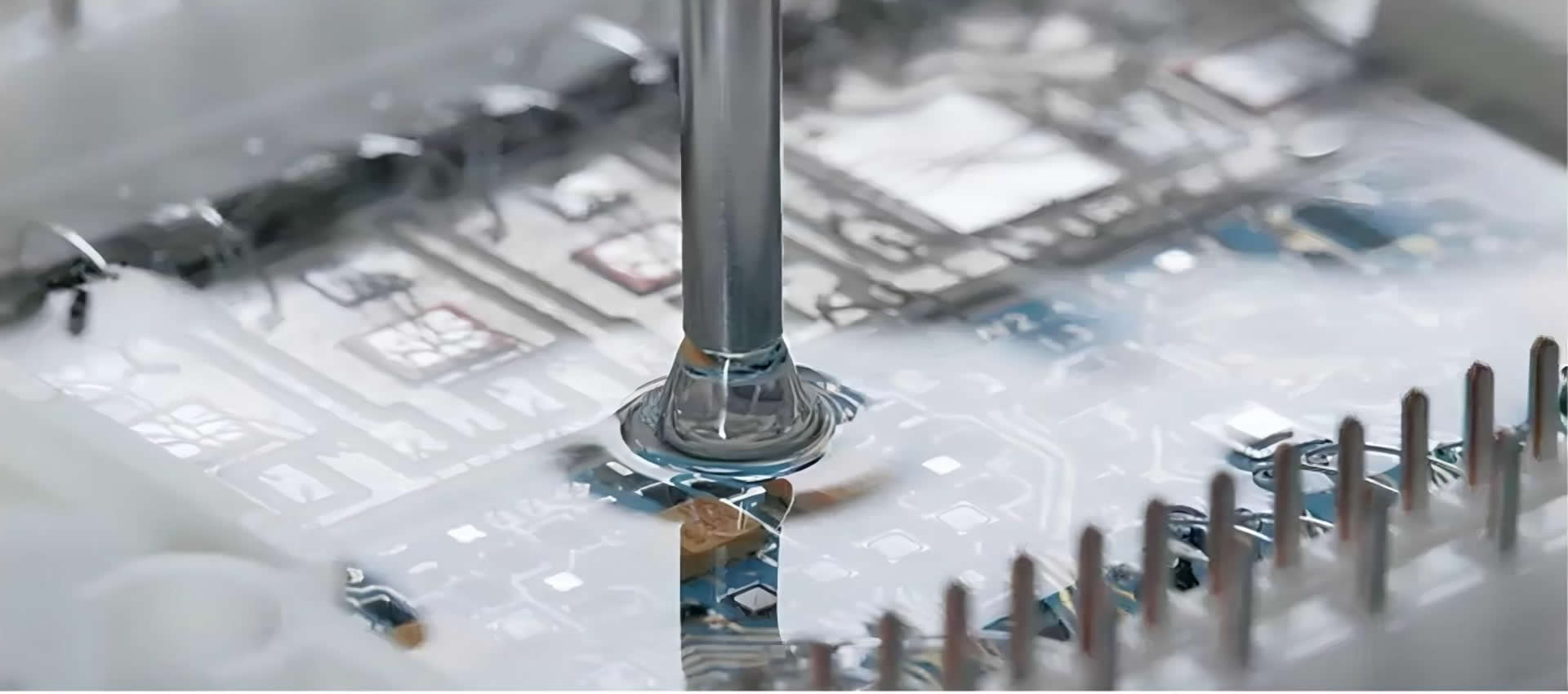
Electronics: Centrifugal degassing of Biyuan’slow-viscosity fluids ensures bubble-free encapsulation for sensors, preventing electrical failures .
Automotive: With ISO 9001/14001 certifications, Biyuansupplies fluids for gaskets and hose materials that withstand -40°C to 300°C without bubbling .
Conclusion
Preventing air bubbles in Vinyl Terminated Silicone Fluid requires a holistic approach—from material selection and environmental control to advanced degassing technologies. By partnering with a trusted Vinyl Terminated Silicone Fluid factorylike Biyuan, industries gain access to tailored formulations, technical support, and certified products that align with global standards. Implementing these strategies ensures durable, high-performance outcomes that meet the rigorous demands of modern manufacturing.
An Industry Analysis
Understanding VOC Emissions in Silicone Manufacturing
Vinyl Terminated Silicone Fluid (VT-SF) has become a critical material across numerous industries due to its exceptional thermal stability, chemical resistance, and versatile applications. A fundamental question that arises among manufacturers and end-users alike concerns its .
Understanding Functional Groups in Vinyl-Terminated Silicone Fluids: Properties and Applications
Vinyl-terminated silicone fluids (VT-SiFs) are specialized organosilicon compounds that play a pivotal role in advanced material science and industrial applications. Their unique molecular architecture, centered around reactive functional groups, enables ex.
Vinyl-terminated silicone fluids are critical components in industries ranging from electronics to construction, where purity directly impacts performance and product longevity. Detecting impurities in these materials requires a combination of advanced analytical techniques and rigorous quality protocols. Below, we explore proven methods to uncover contami.
Signs of Degraded Vinyl Terminated Silicone Fluid and How to Address Them
Vinyl Terminated Silicone Fluid is a critical material in industries ranging from medical devices to automotive manufacturing, prized for its thermal stability, flexibility, and chemical resistance. However, degradation can compromise its performance, leading to equipment failure.
Unlock Manufacturing Excellence with Private Label Vinyl Terminated Silicone Fluid
Introduction: The Strategic Advantage of Private Label Vinyl Terminated Silicone Fluid
In today’s competitive manufacturing landscape, private labeling offers businesses a powerful tool for brand differentiation and market expansion. When it comes to high-perfo.
Understanding the Core Components of Vinyl Terminated Silicone Fluid
Vinyl Terminated Silicone Fluid (VT-SF) is a specialized polymer widely recognized for its versatility in industrial applications, from silicone rubber production to advanced coatings. To achieve its exceptional performance, the formulation of VT-SF relies on a precise combination of .
In the sophisticated domain of polymer material science, the transition from chemical components to high-performance elastomers represents a precise architectural endeavor. For formulators developing addition-cure systems—ranging from medical-grade implants and flexible electronics to industrial seals and aerospace components—the primary reactive polymer f.
Enhancing Adhesion of Vinyl Terminated Silicone Fluid to Substrates: Strategies and Solutions
Vinyl Terminated Silicone Fluid is a cornerstone material in industries ranging from medical devices to electronics, thanks to its flexibility, thermal stability, and biocompatibility. However, a persistent challenge faced by engineers and manufacturers is ach.
In the sophisticated domain of polymer engineering, achieving exact mechanical properties, thermal resilience, and application-specific performance requires foundational components with precise molecular architecture. For formulators of addition-cure systems—from liquid silicone rubbers (LSR) and high-consistency rubbers (HCR) to specialty gels, adhesives,.
Vinyl Terminated Silicone Fluid: A Versatile Solution for Modern Cosmetics and Personal Care
In the ever-evolving world of cosmetics and personal care, ingredients must balance safety, efficacy, and performance. Vinyl Terminated Silicone Fluid (VT-Si) has emerged as a standout choice, offering unique properties that cater to diverse formulation needs.
How to Test the Viscosity of Vinyl Terminated Silicone Fluid: A Comprehensive Guide
Viscosity is a critical property for vinyl terminated silicone fluid, influencing its performance in applications ranging from industrial lubrication to cosmetic formulations. Accurate viscosity testing ensures product consistency, process efficiency, and compliance wi.
Understanding the Thermal Stability of Vinyl Terminated Silicone Fluid
Vinyl terminated silicone fluid, a specialized type of silicone polymer, has emerged as a critical material in industries requiring high-performance solutions under extreme temperatures. Its unique molecular structure and tailored formulations make it a standout choice for applicati.
Vinyl Terminated Silicone Fluid is a versatile material widely used in industries like adhesives, sealants, and coatings due to its excellent thermal stability and crosslinking capabilities. For businesses sourcing this product, delivery timelines are critical to maintaining production schedules and meeting client demands. Here’s a detailed breakdown of wh.
Optimizing Performance: Key Additives for Vinyl Terminated Silicone Fluid Formulations
Introduction
Vinyl Terminated Silicone Fluid represents a cornerstone material in advanced silicone products, offering exceptional flexibility, thermal stability, and reactivity for diverse industrial applications. As a reactive polymer featuring vinyl groups at .
What Makes Vinyl Terminated Silicone Fluid a “Reactive” Choice in Industrial Applications?
In the realm of specialty chemicals, vinyl terminated silicone fluid stands out for its unique chemical structure and versatility. But what exactly defines its “reactivity,” and why is this property so critical for industrial applicatio.
Health Hazards of Vinyl Terminated Silicone Fluid: A Comprehensive Safety Analysis
Vinyl Terminated Silicone Fluid (VT-SF) has become an essential material across numerous industries due to its unique thermal stability, chemical resistance, and versatile application properties. However, understanding its potential health hazards is critical for ensuring.
Understanding the Chemical Resistance of Vinyl Terminated Silicone Fluid: A Comprehensive Guide
Vinyl terminated silicone fluid, a versatile polymer widely used in industries ranging from electronics to automotive manufacturing, is renowned for its adaptability and durability. One of its most critical properties—resistance to chemicals—plays a pivotal .
A Comprehensive Analysis
Understanding Vinyl Terminated Silicone Fluid
Vinyl Terminated Silicone Fluid represents a specialized category of silicone polymers characterized by vinyl groups (-CH=CH₂) at the molecular chain terminals. This unique chemical structure enhances its reactivity, making it particularly valuable for various industrial applicati.
Understanding the Dielectric Constant of Vinyl-Terminated Silicone Fluids: Properties, Applications, and Material Selection
In the realm of advanced materials, vinyl-terminated silicone fluids have emerged as critical components in industries ranging from electronics to aerospace. One of their most crucial properties is the dielectric constant (Dk).
Essential Safety Equipment for Handling Vinyl Terminated Silicone Fluid
Understanding Vinyl Terminated Silicone Fluid
Vinyl Terminated Silicone Fluid, also known as vinyl-terminated polydimethylsiloxane (VI PDMS), is a crucial industrial material used in silicone elastomers, sealants, coatings, and high-performance materials. With its reactive vinyl .
Sustainable Manufacturing of Vinyl Terminated Silicone Fluid: Eco-Friendly Production Processes
Vinyl terminated silicone fluid (VT-SF), also known as vinyl-terminated polydimethylsiloxane, represents a specialized category of organosilicon compounds featuring reactive vinyl groups (-CH=CH₂) at both molecular terminals. This unique chemical structure pr.
Enhancing 3D Printing Filament Flexibility: The Role of Vinyl-Terminated Silicone Fluids
For 3D printing enthusiasts and professionals, achieving the perfect balance between durability, detail, and flexibility in printed parts remains a persistent challenge. Traditional thermoplastic filaments—especially flexible materials like TPU or TPE—often face iss.
Asia-Pacific Drives Global Silicone Fluid Market: An In-Depth Look at China’s Manufacturing Surge
The Asia-Pacific regionhas emerged as the dominant force in the global vinyl terminated silicone fluid market, with China’s manufacturing prowess serving as the primary catalyst. This versatile material, characterized by its reactive vinyl end g.
Vinyl terminated silicone fluid (ViPDMS) represents a specialized class of organosilicon compounds characterized by reactive vinyl groups (-CH=CH₂) at both ends of the polydimethylsiloxane molecular chain. This unique chemical structure, with the formula CH₂=CH-Si(CH₃)₂O[(CH₃)₂SiO]ₙ(CH₃)₂Si-CH=CH₂, provides exceptional versatility across industrial applica.
Overcoming Extreme Conditions: How Vinyl Terminated Silicone Fluid is Redefining Aerospace Coating Performance
In the unforgiving environment of aerospace—where components face blistering heat, rapid temperature fluctuations, UV radiation, and chemical exposure—the demand for advanced protective coatings has never been greater. Traditional coatings ofte.
Solving Volatility Challenges in Medical Device Manufacturing: The Rise of Advanced Vinyl-Terminated Silicone Fluids
For medical device engineers and manufacturers, selecting materials that balance performance, safety, and regulatory compliance is a constant balancing act. Among the critical considerations? Volatility. High-volatility silicones can com.
Vinyl Terminated Silicone Fluid: Engineering Weather-Defying Construction Sealants
In the face of escalating climate challenges, the construction industry is turning to advanced material science to enhance building resilience. At the forefront of this innovation are specialty silicone-based sealants, with vinyl terminated silicone fluid playing a pivota.
Vinyl Terminated Silicone Fluid: Navigating EU REACH Compliance for Global Market Access
Understanding Vinyl Terminated Silicone Fluid
Vinyl terminated silicone fluid, also known as vinyl-terminated polydimethylsiloxane (Vi-PDMS), is a specialized organosilicone compound featuring reactive vinyl groups (-CH=CH₂) at both ends of the polymer chain. Thi.
Regulatory Shifts Reshaping the Vinyl Terminated Silicone Fluid Industry
The production and application of vinyl terminated silicone fluid are undergoing significant transformation as new environmental regulations redefine global market dynamics. These high-performance materials, renowned for their thermal stability and chemical resistance, now face bo.
The healthcare industry’s recovery from the pandemic has accelerated demand for high-performance materials that meet increasingly sophisticated medical needs. Among these, vinyl terminated silicone fluids have emerged as a critical component driving innovation across medical devices, pharmaceuticals, and healthcare technologies. These specialized flu.
Nanotechnology-Enhanced Vinyl Terminated Silicone Fluid: Revolutionizing Anti-Corrosion Protection
Introduction to a New Era in Corrosion Prevention
The integration of nanotechnology with vinyl terminated silicone fluid represents a groundbreaking advancement in anti-corrosion technology. This innovative combination leverages the unique properties of.
Revolutionizing 5G Infrastructure with High-Performance Vinyl-Terminated Silicone Fluids
The rapid evolution of 5G communication demands materials that can withstand extreme conditions while maintaining performance reliability. Among these, vinyl-terminated silicone fluids (CAS 68083-19-2) have emerged as a game-changing solution, offering unparallel.
Pharmaceutical Innovations with Vinyl Terminated Silicone Fluid: Advancing Drug Delivery Systems
Introduction
The pharmaceutical industry continuously seeks innovative materials that can enhance drug delivery efficacy and patient outcomes. Among these materials, vinyl terminated silicone fluids have emerged as a versatile polymer with unique proper.
Vinyl Terminated Silicone Fluid: Advancing Wind Turbine Performance and Reliability
The global transition toward renewable energy has intensified the demand for advanced materials that enhance the efficiency and durability of clean energy technologies. Among these, vinyl terminated silicone fluid has emerged as a critical component in wind energy applic.
Enhancing Adhesive Performance with Vinyl Terminated Silicone Fluid: A Comprehensive Guide to Bond Strength Optimization
Introduction to Vinyl Terminated Silicone Fluid
Vinyl terminated silicone fluid, also known as vinyl-terminated polydimethylsiloxane (Vi-PDMS), represents a specialized class of organosilicon compounds that have revolutionized adhe.
In the realm of high-performance materials, low molecular weight vinyl-terminated silicone fluid (VTSF) has emerged as a critical component for precision coatings, combining exceptional reactivity with tailored physical properties. Its unique molecular architecture—featuring reactive vinyl end groups on a flexible siloxane backbone—enables formulators to d.
Vinyl Terminated Silicone Fluid: Comprehensive Technical Overview and Safety Protocols
Vinyl Terminated Silicone Fluid (CAS 68083-19-2), chemically known as vinyl-terminated polydimethylsiloxane, represents a specialized category of reactive silicone polymers with significant industrial importance. Characterized by reactive vinyl groups (-CH=CH₂) at bo.
Global Market for Vinyl Terminated Silicone Fluid Poised for Significant Growth, Driven by Multi-Industry Demand and Innovation
The global market for vinyl terminated silicone fluid (VTSF) is projected to experience substantial growth, with its value expected to reach approximately US $3.2 billion by 2030. This growth is fueled by the material’s e.
The Silent Performers: How Vinyl Terminated Silicones Redefine Material Excellence
In the world of specialty chemicals, few materials strike the perfect balance between stability and reactivity quite like vinyl-terminated silicones. These fluids—often unsung heroes in industrial applications—leverage their unique molecular architecture to solve problems.
The global shift toward sustainable manufacturing has triggered a material science revolution, with vinyl terminated silicone fluid (VT silicone fluid) emerging as a environmentally preferable alternative to traditional fluorosilicones. This transition represents more than mere substitution—it reflects a fundamental rethinking of how industrial materials b.
Vinyl termified silicone fluids represent a specialized class of medical-grade materials engineered for advanced healthcare applications. These reactive fluids feature terminal vinyl groups that enable precise molecular customization and controlled crosslinking capabilities, making them ideal for developing implantable devices, drug delivery systems, and d.
Vinyl silicone fluid is revolutionizing cosmetic and personal care formulations through its unique reactive properties and sensory enhancement capabilities. This functional silicone material features terminal vinyl groups that enable customizable cross-linking while maintaining the characteristic smoothness of silicone-based ingredients.
Vinyl sili.
Vinyl silicone fluid, as a core functional silicone product, demonstrates exceptional versatility and reliability in the industrial additives sector. Its unique molecular structure combines the flexibility of a siloxane backbone with the reactivity of terminal vinyl groups, delivering customized solutions for various industrial applications.
In polymer .
Vinyl terminated fluid is emerging as a transformative additive in textile and leather manufacturing, offering a unique combination of processing enhancement and performance optimization. This reactive silicone fluid leverages its terminal vinyl groups to create durable molecular bridges with fibers and leather substrates, delivering lasting functional ben.

Contact Us
We're here to help with any questions or inquiries you may have
Contact Information
Address
No. 116, Jiangdong Street, Yiwu City, Jinhua City, Zhejiang Province,China