What is the difference between synthesized and distilled Vinyl Terminated Silicone Fluid? - Vinyl Terminated Silicone Fluid factory
Vinyl Terminated Silicone Fluid
Information Center
Everything you need to know about our products and company
Understanding the Key Differences Between Synthesized and Distilled Vinyl Terminated Silicone Fluids
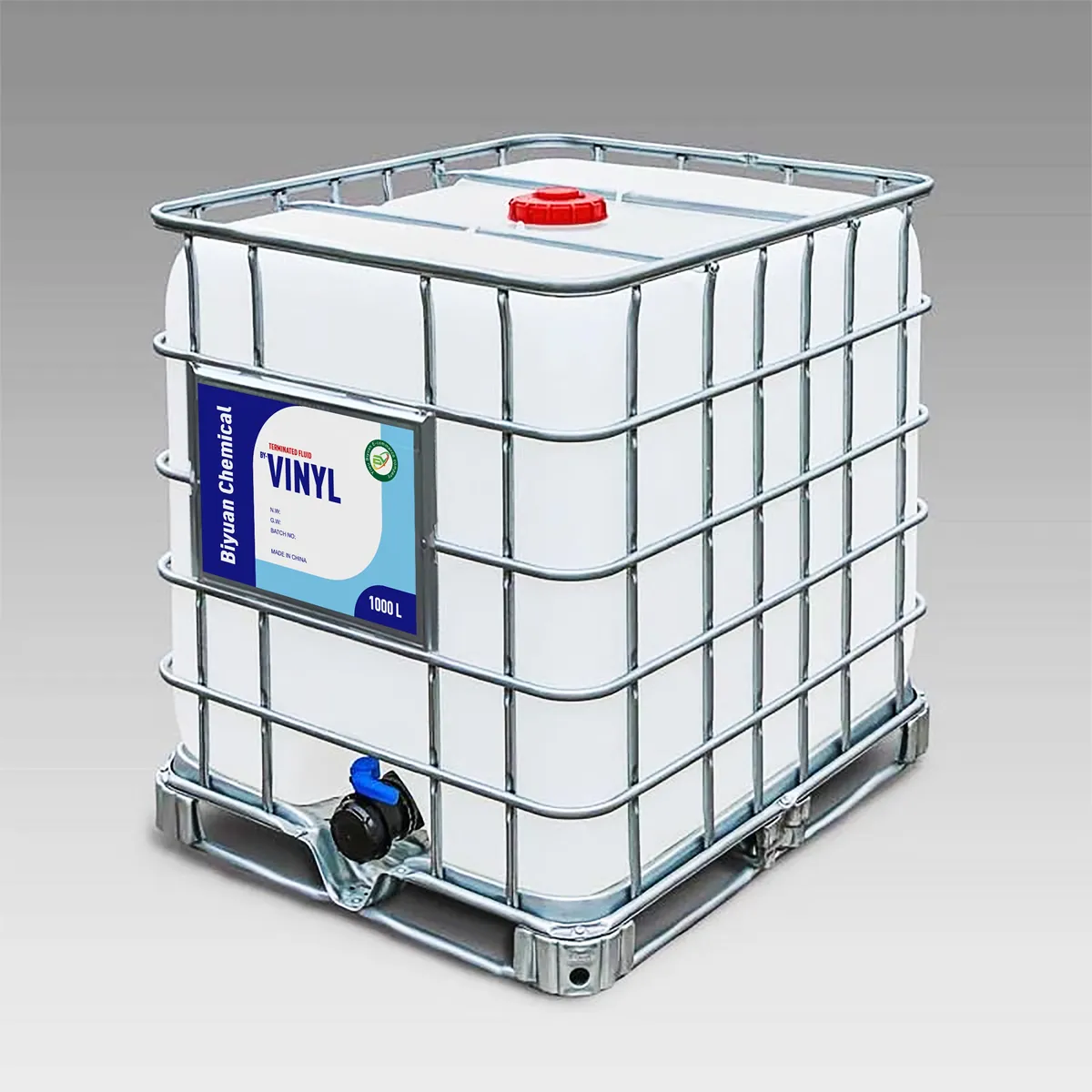
Vinyl Terminated Silicone Fluids are indispensable in industries ranging from electronics to construction, offering exceptional performance in applications like coatings, sealants, and elastomers. However, the terms “synthesized” and “distilled” often create confusion among professionals seeking high-performance materials. This article explores the distinctions between these two processes, their impact on product properties, and how brands like Biyuan leverage advanced techniques to deliver superior solutions.
1. Definition and Production Methods
Synthesized Vinyl Terminated Silicone Fluids:These fluids are engineered through controlled chemical reactions, typically involving platinum-catalyzed hydrosilylation or peroxide activation. The synthesis process ensures precise control over molecular weight, vinyl content, and crosslinking density, which are critical for applications requiring tailored mechanical properties. For example, synthesized fluids with high vinyl content enable robust crosslinking networks, ideal for heat-resistant adhesives or weatherproof coatings.
Distilled Vinyl Terminated Silicone Fluids:Distillation focuses on purification and viscosity adjustment. Techniques like molecular distillation or short-path distillation remove impurities and volatile components, ensuring high-purity formulations. This process is particularly vital for applications demanding ultra-low volatility, such as medical-grade sealants or sensitive electronic encapsulants.
2. Performance Characteristics
Aspect
Synthesized Fluids
Distilled Fluids
Chemical Stability
Optimized for crosslinking efficiency
Enhanced purity reduces degradation risks
Viscosity Control
Adjustable for specific application needs
Fine-tuned for smooth application consistency
Thermal Resistance
High (up to 300°C) due to robust networks
Moderate, ideal for low-temperature curing
Application Scope
Industrial adhesives, structural sealants
Electronics, cosmetics, and precision molding
3. Industry Applications
Synthesized Fluids in Advanced Manufacturing:Brands like Biyuan utilize synthesized Vinyl Terminated Silicone Fluids to produce high-performance coatings for aerospace and automotive sectors. These materials resist UV radiation and moisture, ensuring long-term durability.
Distilled Fluids in Sensitive Applications:Distilled variants are preferred in pharmaceuticals and cosmetics due to their purity. For instance, they serve as non-toxic lubricants in medical devices or stabilizers in anti-aging skincare formulations.
4. Technical Advantages
Synthesized Fluids:
Enable customization of mechanical strength and elasticity.
Compatible with platinum-catalyzed curing systems for rapid curing.
Distilled Fluids:
Minimize impurities for consistent product quality.
Reduce batch variability, critical for high-stakes industries.
5. Why Partner with Biyuan?
Biyuan stands out as a leader in delivering both synthesized and distilled Vinyl Terminated Silicone Fluids. Our advanced production facilities ensure:
Precision Engineering: Tailored formulations for your specific viscosity, thermal stability, and curing requirements.
Quality Assurance: Rigorous testing to meet global standards (e.g., ASTM, ISO).
Sustainable Solutions: Eco-friendly processes that align with industry regulations.
For industries requiring reliable, high-performance materials—from electronics manufacturers to construction firms—Biyuan provides the technical expertise and product range to elevate your formulations.
Optimize Your Formulations with Biyuan’s Vinyl Terminated Silicone Fluids
Whether you prioritize crosslinking efficiency or ultra-pure applications, Biyuan offers cutting-edge solutions to meet evolving market demands. Contact our team today to explore custom-grade fluids that drive innovation in your industry.
In the world of specialty silicone materials, making the right raw material choice can define the success of your final product. For manufacturers and formulators seeking to develop next-generation solutions in electronics, automotive, renewable energy, and beyond, the selection of a reliable, high-performance silicone base is critical. BY-Vinyl Silicone F.
In the sophisticated engineering of silicone materials, achieving predictable, high-performance outcomes requires building blocks with precise molecular functionality. For developers of liquid silicone rubbers (LSR), high-consistency rubbers (HCR), gels, adhesives, and specialty coatings, the primary vinyl-functional polymer is not merely an ingredient; it.
How to Determine the Optimal Viscosity for Vinyl Terminated Silicone Fluid in Your Application
Selecting the right viscosity for vinyl terminated silicone fluid (VTMSF) is critical to achieving performance, cost-efficiency, and compatibility in diverse industrial and consumer applications. This guide explores key factors influencing viscosity selection.
Vinyl-terminated silicone fluids are critical components in industries ranging from electronics to construction, where purity directly impacts performance and product longevity. Detecting impurities in these materials requires a combination of advanced analytical techniques and rigorous quality protocols. Below, we explore proven methods to uncover contami.
Enhancing Adhesion of Vinyl Terminated Silicone Fluid to Substrates: Strategies and Solutions
Vinyl Terminated Silicone Fluid is a cornerstone material in industries ranging from medical devices to electronics, thanks to its flexibility, thermal stability, and biocompatibility. However, a persistent challenge faced by engineers and manufacturers is ach.
Understanding the Viscosity Ranges of Vinyl-Terminated Silicone Fluids
Vinyl-terminated silicone fluids, also known as vinyl-terminated polydimethylsiloxanes (Vi-PDMS), are critical materials in industries ranging from electronics to construction. Their viscosity directly impacts performance in applications like rubber curing, coatings, and adhesives. .
Signs of Degraded Vinyl Terminated Silicone Fluid and How to Address Them
Vinyl Terminated Silicone Fluid is a critical material in industries ranging from medical devices to automotive manufacturing, prized for its thermal stability, flexibility, and chemical resistance. However, degradation can compromise its performance, leading to equipment failure.
Vinyl Terminated Silicone Fluid: Technical Specifications and Biyuan’s Factory Capabilities
Introduction to Vinyl Terminated Silicone Fluid
Vinyl Terminated Silicone Fluid, chemically known as vinyl terminated polydimethylsiloxane (CAS 68083-19-2), represents a specialized category of reactive silicone polymers characterized by terminal vinyl g.
Understanding Functional Groups in Vinyl-Terminated Silicone Fluids: Properties and Applications
Vinyl-terminated silicone fluids (VT-SiFs) are specialized organosilicon compounds that play a pivotal role in advanced material science and industrial applications. Their unique molecular architecture, centered around reactive functional groups, enables ex.
The Critical Role of Vinyl Terminated Silicone Fluid in Advanced 3D Printing Materials
In the rapidly evolving field of additive manufacturing, vinyl terminated silicone fluid has emerged as a transformative material, enabling breakthroughs in everything from medical devices to soft robotics. This high-performance polymer, characterized by reactive v.
In the highly competitive and innovation-driven daily chemical industry, processing plants are constantly seeking advanced raw materials to enhance product quality, improve processing efficiency, and meet evolving consumer demands for performance, safety, and sustainability. Among various functional additives, silicone-based materials have gained significa.
What Industries Rely on Vinyl Terminated Silicone Fluid?
Vinyl Terminated Silicone Fluid (VTMS) has emerged as a cornerstone material in modern industrial applications, offering unparalleled versatility and performance. Its unique chemical structure—featuring reactive vinyl groups at the molecular chain’s termini—enables exceptional crosslinking capab.
In the intricate science of silicone engineering, the final properties of an elastomer—its strength, flexibility, thermal resilience, and processability—are fundamentally determined at the molecular level. For developers of addition-cure silicone systems, from medical-grade gels and flexible adhesives to durable seals and high-temperature components, the c.
Vinyl Terminated Silicone Fluid is a versatile material widely used in industries like adhesives, sealants, and coatings due to its excellent thermal stability and crosslinking capabilities. For businesses sourcing this product, delivery timelines are critical to maintaining production schedules and meeting client demands. Here’s a detailed breakdown of wh.
How Vinyl Terminated Silicone Fluid Achieves Minimal By-Products in Production
The production of vinyl terminated silicone fluid (VTMS) is a cornerstone of modern silicone chemistry, with applications spanning electronics, construction, and advanced materials. A critical question for manufacturers and R&D teams revolves around by-product manageme.
In the manufacturing of high-performance sealing components, the selection of raw materials is not just a procurement decision—it is a critical engineering choice that determines product longevity, reliability, and performance under demanding conditions. When it comes to sealing rings used in automotive, industrial machinery, medical devices, and electrica.
How Vinyl Terminated Silicone Fluids Are Engineered: The Role of Catalysts in Performance Optimization
Vinyl terminated silicone fluids are pivotal in industries ranging from medical devices to advanced electronics, offering exceptional thermal stability, flexibility, and chemical resistance. A critical question arises: Does their production involve c.
Compatibility and Applications of Vinyl Terminated Silicone Fluid with Organic Solvents
Vinyl Terminated Silicone Fluid (CAS 68083-19-2) is highly compatible with a wide range of organic solvents, making it a versatile material for industrial applications. Its molecular structure, featuring reactive vinyl groups at the terminals of a polydimethylsiloxa.
Vinyl Terminated Silicone Fluid has become an indispensable material across industries from aerospace to medical devices, prized for its thermal stability, flexibility, and reactivity. However, viscosity changes during production, storage, or application can significantly impact performance and processing efficiency. Understanding how to prevent and addres.
Understanding Vinyl Terminated Silicone Fluid: A Comprehensive Guide
Vinyl terminated silicone fluid is a specialized type of silicone oil engineered for high-performance applications across industries. While often grouped under the broader umbrella of silicone oils, its unique molecular structure and functional properties set it apart as a versatile m.
Vinyl Terminated Silicone Fluid: Navigating EU REACH Compliance for Global Market Access
Understanding Vinyl Terminated Silicone Fluid
Vinyl terminated silicone fluid, also known as vinyl-terminated polydimethylsiloxane (Vi-PDMS), is a specialized organosilicone compound featuring reactive vinyl groups (-CH=CH₂) at both ends of the polymer chain. Thi.
Mastering Viscosity Selection for Vinyl Terminated Silicone Fluid Applications
Introduction
In the world of specialized silicone materials, viscosity stands as a critical parameter that directly influences performance across countless industrial applications. Vinyl terminated silicone fluid (VTMSF) has emerged as a cornerstone material in industries .
Introduction: The Role of Vinyl Functionalization in Silicone Performance
The pursuit of enhanced material performance has positioned vinyl-terminated silicone fluids as critical additives in room-temperature vulcanized (RTV) silicone rubber formulations. These specialized fluids, characterized by reactive vinyl groups at both molecular terminals, fund.
Regulatory Shifts Reshaping the Vinyl Terminated Silicone Fluid Industry
The production and application of vinyl terminated silicone fluid are undergoing significant transformation as new environmental regulations redefine global market dynamics. These high-performance materials, renowned for their thermal stability and chemical resistance, now face bo.
Introduction to Vinyl Terminated Silicone Fluid
Vinyl Terminated Silicone Fluid, also known as vinyl-terminated polydimethylsiloxane, represents a specialized category of silicone oils characterized by reactive vinyl groups at both molecular ends. This unique chemical structure, with the formula CH₂=CH-Si(CH₃)₂O[(CH₃)₂SiO]ₙ(CH₃)₂Si-CH=CH₂, enables these.
Vinyl terminated silicone fluid (ViPDMS) represents a specialized class of organosilicon compounds characterized by reactive vinyl groups (-CH=CH₂) at both ends of the polydimethylsiloxane molecular chain. This unique chemical structure, with the formula CH₂=CH-Si(CH₃)₂O[(CH₃)₂SiO]ₙ(CH₃)₂Si-CH=CH₂, provides exceptional versatility across industrial applica.
The automotive industry is experiencing a transformative shift in sealant technology, driven by the innovative application of Vinyl Terminated Silicone Fluid (VT-SF). This specialized material has emerged as a critical component in developing high-performance sealing solutions that meet the evolving demands of modern vehicles, particularly with the global .
Vinyl Terminated Silicone Fluid: The Game-Changer in UV Curing Technology
Introduction
In the rapidly evolving world of advanced materials, vinyl terminated silicone fluids have emerged as a transformative component in UV curing technology, particularly revolutionizing production timelines across multiple industries. These specialized silicone fluid.
Enhancing 3D Printing Filament Flexibility: The Role of Vinyl-Terminated Silicone Fluids
For 3D printing enthusiasts and professionals, achieving the perfect balance between durability, detail, and flexibility in printed parts remains a persistent challenge. Traditional thermoplastic filaments—especially flexible materials like TPU or TPE—often face iss.
Solving Electronics Overheating Challenges: The Rise of Vinyl-Terminated Silicone Fluids with Superior Thermal Conductivity
In today’s hyper-connected world, electronic devices—from smartphones and laptops to industrial servers and 5G base stations—are growing more powerful by the day. But with increased processing power comes a critical challenge: hea.
Enhancing Adhesive Performance with Vinyl Terminated Silicone Fluid: A Comprehensive Guide to Bond Strength Optimization
Introduction to Vinyl Terminated Silicone Fluid
Vinyl terminated silicone fluid, also known as vinyl-terminated polydimethylsiloxane (Vi-PDMS), represents a specialized class of organosilicon compounds that have revolutionized adhe.
Overcoming Extreme Conditions: How Vinyl Terminated Silicone Fluid is Redefining Aerospace Coating Performance
In the unforgiving environment of aerospace—where components face blistering heat, rapid temperature fluctuations, UV radiation, and chemical exposure—the demand for advanced protective coatings has never been greater. Traditional coatings ofte.
The Silent Performers: How Vinyl Terminated Silicones Redefine Material Excellence
In the world of specialty chemicals, few materials strike the perfect balance between stability and reactivity quite like vinyl-terminated silicones. These fluids—often unsung heroes in industrial applications—leverage their unique molecular architecture to solve problems.
The electronics industry is increasingly adopting vinyl terminated silicone fluid as a cornerstone material for protecting sensitive components from moisture, dust, and environmental stress. This specialized polymer has become indispensable for waterproof encapsulation solutions thanks to its unique combination of electrical and mechanical properties tha.
Revolutionizing 5G Infrastructure with High-Performance Vinyl-Terminated Silicone Fluids
The rapid evolution of 5G communication demands materials that can withstand extreme conditions while maintaining performance reliability. Among these, vinyl-terminated silicone fluids (CAS 68083-19-2) have emerged as a game-changing solution, offering unparallel.
Vinyl Terminated Silicone Fluid: The Modern Choice for Skin-Friendly Cosmetics
Introduction
In the evolving world of cosmetic science, vinyl terminated silicone fluids have emerged as sophisticated ingredients that combine performance with skin compatibility. These specialized silicone polymers, characterized by reactive vinyl groups at both ends of .
Global Market for Vinyl Terminated Silicone Fluid Poised for Significant Growth, Driven by Multi-Industry Demand and Innovation
The global market for vinyl terminated silicone fluid (VTSF) is projected to experience substantial growth, with its value expected to reach approximately US $3.2 billion by 2030. This growth is fueled by the material’s e.
Vinyl Terminated Silicone Fluid: Enabling Next-Generation 3D-Printed Electronics
The Convergence of Material Science and Additive Manufacturing
In the rapidly evolving field of 3D-printed electronics, vinyl terminated silicone fluid has emerged as a critical material that bridges the gap between precision manufacturing and functional performance. Thi.
Solving Volatility Challenges in Medical Device Manufacturing: The Rise of Advanced Vinyl-Terminated Silicone Fluids
For medical device engineers and manufacturers, selecting materials that balance performance, safety, and regulatory compliance is a constant balancing act. Among the critical considerations? Volatility. High-volatility silicones can com.
Asia-Pacific Drives Global Silicone Fluid Market: An In-Depth Look at China’s Manufacturing Surge
The Asia-Pacific regionhas emerged as the dominant force in the global vinyl terminated silicone fluid market, with China’s manufacturing prowess serving as the primary catalyst. This versatile material, characterized by its reactive vinyl end g.
Vinyl termified silicone fluids represent a specialized class of medical-grade materials engineered for advanced healthcare applications. These reactive fluids feature terminal vinyl groups that enable precise molecular customization and controlled crosslinking capabilities, making them ideal for developing implantable devices, drug delivery systems, and d.
Vinyl silicone fluid is revolutionizing cosmetic and personal care formulations through its unique reactive properties and sensory enhancement capabilities. This functional silicone material features terminal vinyl groups that enable customizable cross-linking while maintaining the characteristic smoothness of silicone-based ingredients.
Vinyl sili.
Vinyl silicone fluid, as a core functional silicone product, demonstrates exceptional versatility and reliability in the industrial additives sector. Its unique molecular structure combines the flexibility of a siloxane backbone with the reactivity of terminal vinyl groups, delivering customized solutions for various industrial applications.
In polymer .
Vinyl terminated fluid is emerging as a transformative additive in textile and leather manufacturing, offering a unique combination of processing enhancement and performance optimization. This reactive silicone fluid leverages its terminal vinyl groups to create durable molecular bridges with fibers and leather substrates, delivering lasting functional ben.

Contact Us
We're here to help with any questions or inquiries you may have
Contact Information
Address
No. 116, Jiangdong Street, Yiwu City, Jinhua City, Zhejiang Province,China