What is the shelf life of Vinyl Terminated Silicone Fluid under proper storage? - Vinyl Terminated Silicone Fluid factory
Vinyl Terminated Silicone Fluid
Information Center
Everything you need to know about our products and company
Understanding the Shelf Life of Vinyl Terminated Silicone Fluid: Key Factors and Best Practices
Vinyl Terminated Silicone Fluid (VT-SF), a versatile polymer widely used in industries ranging from electronics to automotive manufacturing, is prized for its thermal stability, flexibility, and compatibility with crosslinking agents. One critical aspect for users is its shelf life, which depends on storage conditions, packaging integrity, and product formulation. This article explores how to maximize the longevity of VT-SF while maintaining its performance characteristics.
1. Standard Shelf Life Under Optimal Conditions
Most commercially available VT-SF products, such as those in the COSIL V-Series or Siwin-VF21A, are designed with a shelf life of 12–36 months when stored properly. For instance:
Unopened containers of COSIL’s vinyl-terminated polydimethylsiloxane (CAS 68083-19-2) retain stability for up to 12 months if kept in sealed, dry environments .
Specialty-grade products like Siwin-VF21A (viscosity: 350–20,000 cSt) offer extended shelf lives of 36 months under controlled conditions due to advanced stabilizers and packaging .
These timelines assume adherence to manufacturer guidelines, which often include temperature and humidity controls.
2. Critical Storage Conditions
To preserve VT-SF’s reactivity and prevent degradation, follow these protocols:
Temperature: Store between 5°C and 25°C (41°F–77°F). Extreme heat accelerates oxidation, while freezing may cause viscosity shifts .
Humidity: Maintain low humidity (<50%) to avoid hydrolysis. Siloxanes are generally hydrolysis-resistant, but prolonged moisture exposure can compromise additives.
Light Protection: UV radiation degrades organic groups in the polymer chain. Use opaque or UV-blocking containers for long-term storage .
Sealing: Ensure containers are airtight to minimize contamination and evaporation. For example, Silico’s VT-SF requires strict sealing to avoid volatile loss .
3. Post-Opening Handling
Once opened, VT-SF’s shelf life shortens significantly. Best practices include:
Refrigeration: Store opened containers at ≤15°C (59°F) to slow molecular degradation.
Dedicated Tools: Use clean, dry equipment to prevent cross-contamination with solvents or acids, which can destabilize the vinyl groups .
Usage Planning: For high-purity applications (e.g., medical-grade sealants), prioritize smaller batches to reduce waste.
4. Quality Checks for Extended Shelf Life
If storage conditions are less than ideal, perform periodic quality assessments:
Viscosity Testing: A 10–20% increase indicates polymer chain breakdown.
Reactivity Tests: Verify crosslinking efficiency with hydrogenated silicone oil under platinum catalysis .
Visual Inspection: Discard if cloudiness, precipitation, or discoloration (beyond slight yellowing) is observed.
5. Applications Influencing Shelf Life Requirements
The intended use of VT-SF also dictates storage rigor:
Electronics: High-purity grades (e.g., COSIL’s 99.9% pure fluids) demand stricter controls to avoid ionic contamination .
Automotive Coatings: Additive-rich formulations may require refrigeration to preserve surfactant stability.
Adhesives: For products like Sikasil HM (a related acetoxy-curing sealant), accelerated aging tests show stability up to 10 years under ideal conditions .
Why Partner with Biyuan for VT-SF Solutions?
When selecting a supplier, prioritize brands like Biyuan, a leader in silicone technology. Their VT-SF products adhere to ISO 9001 and IATF 16949 standards, ensuring consistent quality and extended shelf life. Biyuan’s formulations are engineered for:
Enhanced Crosslinking: Optimized vinyl content (0.045–0.12 mol/100g) for superior adhesion in elastomers and coatings .
Eco-Friendly Additives: Low-VOC formulations compliant with global environmental regulations.
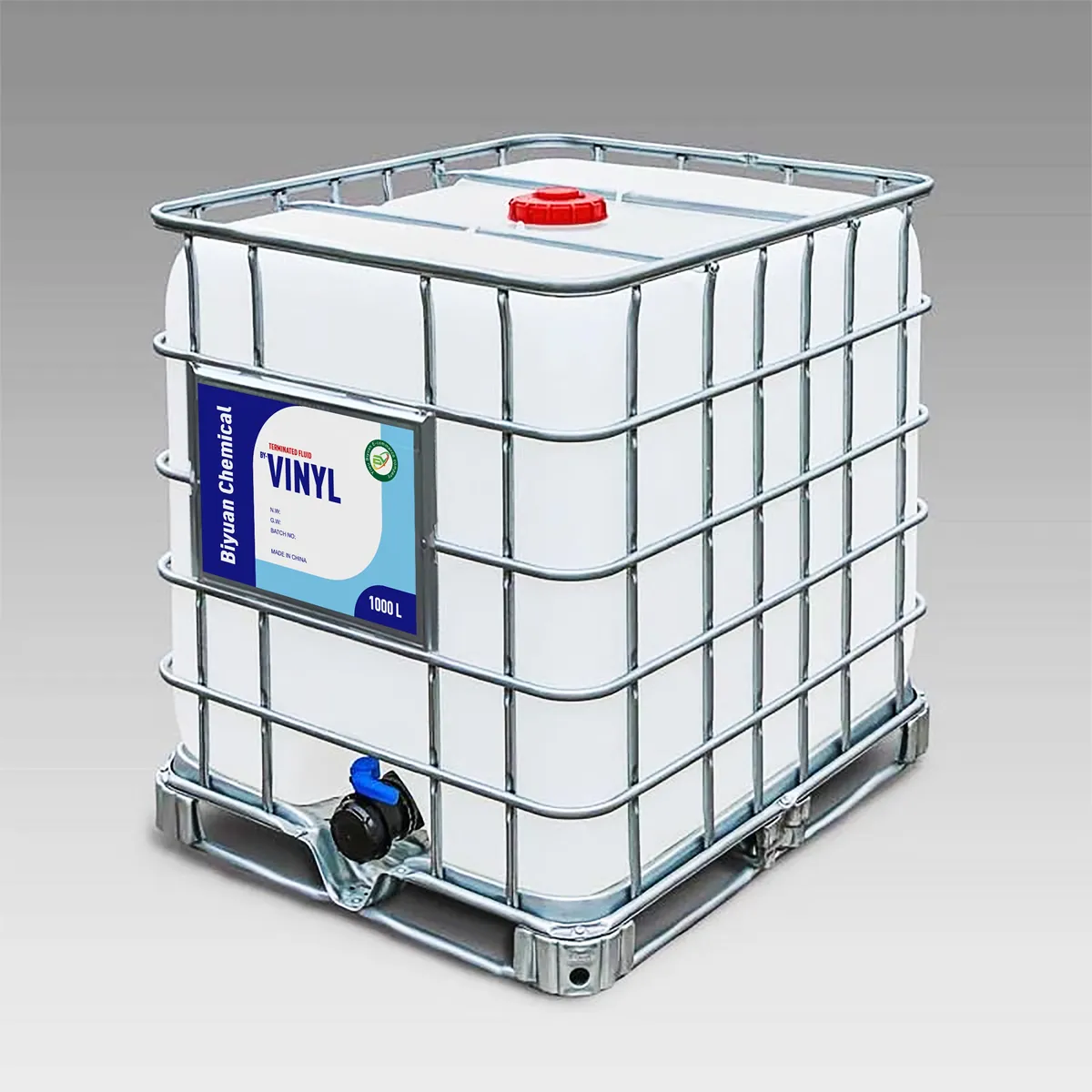
Global Logistics: Robust packaging (e.g., IBC tanks, sealed drums) to maintain integrity during transit.
By choosing Biyuan, industries can mitigate risks associated with premature degradation, ensuring reliable performance in critical applications.
Final Note: Always consult manufacturer datasheets for specific shelf-life guidelines. For bulk purchases or custom formulations, Biyuan offers tailored solutions to align with your operational needs.
In the realm of high-performance industrial materials, Vinyl Terminated Fluid stands out as a transformative solution that bridges the gap between versatility and reliability. This specialized silicone derivative, characterized by its reactive vinyl groups along the polymer chain, has redefined possibilities across sectors ranging from precision electronic.
Understanding the Chemical Composition of Vinyl Terminated Silicone Fluid
Vinyl terminated silicone fluid, a versatile polymer widely used in industrial and consumer applications, derives its functionality from its unique molecular architecture. This article delves into its chemical structure, properties, and applications, while highlighting industry-l.
What Industries Rely on Vinyl Terminated Silicone Fluid?
Vinyl Terminated Silicone Fluid (VTMS) has emerged as a cornerstone material in modern industrial applications, offering unparalleled versatility and performance. Its unique chemical structure—featuring reactive vinyl groups at the molecular chain’s termini—enables exceptional crosslinking capab.
Vinyl Terminated Silicone Fluid (VT Silicone Fluid) is a cornerstone material in industries ranging from electronics to medical devices, offering exceptional thermal stability, chemical resistance, and compatibility with diverse applications. If you’re seeking a free sample to evaluate its performance in your processes, here’s a comprehensive guide to se.
Crafting Pharmaceutical-Grade Vinyl-Terminated Silicone Fluids: A Technical Breakdown
The production of vinyl-terminated silicone fluid demands meticulous control over molecular architecture to achieve the desired balance of flexibility, thermal stability, and biocompatibility. This advanced material, widely used in medical coatings, wearable electro.
Understanding the Role of Vinyl-Terminated Silicone Fluid in Electronic Encapsulation
In the fast-evolving field of electronics manufacturing, protecting sensitive components from environmental stressors is critical. One material that has gained prominence for its versatility and performance is vinyl-terminated silicone fluid. This specialized polymer.
Vinyl Terminated Silicone Fluid has become an indispensable material across industries ranging from aerospace and automotive to electronics and medical devices, valued for its thermal stability, flexibility, and reactivity. However, like many high-performance materials, it remains susceptible to discoloration under certain conditions. Understanding the roo.
Biodegradability of Vinyl Terminated Silicone Fluid: An In-Depth Industry Analysis
Introduction to Vinyl Terminated Silicone Fluid
Vinyl Terminated Silicone Fluid (CAS 68083-19-2), also known as vinyl-terminated polydimethylsiloxane (vinyl-PDMS), represents a specialized category of functional silicone oils with reactive vinyl groups (–CH=CH₂) at bot.
Preventing Contamination in Vinyl Terminated Silicone Fluid Storage: Best Practices for Industrial Users
Understanding the Critical Importance of Proper Storage
Vinyl Terminated Silicone Fluid represents a specialized category of silicone polymers with reactive vinyl groups at both molecular terminals, making them invaluable across numerous industria.
Vinyl Terminated Silicone Fluids are indispensable in industries requiring materials with exceptional flexibility, thermal stability, and crosslinking capabilities. Whether you need adjustments to viscosity for specific processing requirements or enhanced purity for sensitive applications, understanding how these parameters impact performance is critical. .
Understanding the Dielectric Constant of Vinyl-Terminated Silicone Fluids: Properties, Applications, and Material Selection
In the realm of advanced materials, vinyl-terminated silicone fluids have emerged as critical components in industries ranging from electronics to aerospace. One of their most crucial properties is the dielectric constant (Dk).
Understanding the Viscosity Classification of Vinyl Terminated Silicone Fluid
Vinyl terminated silicone fluid, a versatile polymer widely used in industrial applications, is meticulously categorized based on its viscosity to meet diverse operational demands. This classification system ensures optimal performance in fields ranging from construction to e.
Understanding the Flash Point of Vinyl Terminated Silicone Fluid: Safety, Applications, and Industry Insights
Vinyl terminated silicone fluids are widely recognized for their versatility in industrial applications, from lubricants to sealants. A critical property that ensures their safe handling and performance is the flash point—a parameter that dete.
Understanding the CAS Number of Vinyl Terminated Silicone Fluid
Vinyl terminated silicone fluid, a cornerstone in industrial and commercial applications, is identified by its unique chemical structure and reactive properties. For professionals seeking precise technical data or procurement guidance, understanding its CAS number and functional characteri.
In the sophisticated domain of polymer material science, the transition from chemical components to high-performance elastomers represents a precise architectural endeavor. For formulators developing addition-cure systems—ranging from medical-grade implants and flexible electronics to industrial seals and aerospace components—the primary reactive polymer f.
Ensuring Purity in Vinyl Terminated Silicone Fluid Manufacturing: A Comprehensive Guide
Vinyl terminated silicone fluid (VTMS) is a critical component in industries ranging from medical devices to electronics, where purity directly impacts performance, safety, and regulatory compliance. Achieving and maintaining high-purity VTMS requires meticulous con.
The Challenge of Silicone Waste and Emerging Solutions
Vinyl terminated silicone fluid is a valuable material used across numerous industries for its thermal stability, flexibility, and dielectric properties. Like many silicone products, it presents a significant recycling challenge once it reaches end-of-life status. Traditional mechanical recycling me.
Proper Storage Guide for Vinyl Terminated Silicone Fluid
Understanding Vinyl Terminated Silicone Fluid
Vinyl Terminated Silicone Fluid, chemically known as vinyl-terminated polydimethylsiloxane (CAS No. 68083-19-2), is a crucial intermediate in silicone manufacturing. This reactive polymer features vinyl groups at both molecular terminals, enabling i.
Strategies to Prevent Air Bubbles in Vinyl Terminated Silicone Fluid Applications
Vinyl Terminated Silicone Fluid is a critical component in high-performance sealants, mold-making, and electronic encapsulation due to its unique reactive vinyl groups that enable platinum-catalyzed addition curing. However, air bubbles during its application can compromis.
In the rapidly evolving new energy vehicle (NEV) industry, component manufacturers face unprecedented demands for performance, durability, and reliability. From battery systems and power electronics to sealing solutions and thermal management, the materials used in NEV components must meet stringent standards under extreme conditions. Among these advanced .
Vinyl Terminated Silicone Fluid: Revolutionizing Medical Device Manufacturing with Enhanced Safety and Performance
In the rapidly evolving medical technology sector, vinyl terminated silicone fluid (VT-SF) has emerged as a critical material driving innovation in device manufacturing. This specialized silicone fluid features reactive vinyl groups that en.
Enhancing Adhesive Performance with Vinyl Terminated Silicone Fluid: A Comprehensive Guide to Bond Strength Optimization
Introduction to Vinyl Terminated Silicone Fluid
Vinyl terminated silicone fluid, also known as vinyl-terminated polydimethylsiloxane (Vi-PDMS), represents a specialized class of organosilicon compounds that have revolutionized adhe.
The electronics industry is increasingly adopting vinyl terminated silicone fluid as a cornerstone material for protecting sensitive components from moisture, dust, and environmental stress. This specialized polymer has become indispensable for waterproof encapsulation solutions thanks to its unique combination of electrical and mechanical properties tha.
Vinyl Terminated Silicone Fluid vs. Polydimethylsiloxane: Understanding Their Distinct Characteristics
When comparing silicone-based fluids, understanding the fundamental differences between vinyl terminated silicone fluid and conventional polydimethylsiloxane (PDMS) is crucial for selecting the right material for specific applications. While both share.
Introduction to Vinyl Terminated Silicone Fluid
Vinyl Terminated Silicone Fluid, also known as vinyl-terminated polydimethylsiloxane, represents a specialized category of silicone oils characterized by reactive vinyl groups at both molecular ends. This unique chemical structure, with the formula CH₂=CH-Si(CH₃)₂O[(CH₃)₂SiO]ₙ(CH₃)₂Si-CH=CH₂, enables these.
Enhancing 3D Printing Filament Flexibility: The Role of Vinyl-Terminated Silicone Fluids
For 3D printing enthusiasts and professionals, achieving the perfect balance between durability, detail, and flexibility in printed parts remains a persistent challenge. Traditional thermoplastic filaments—especially flexible materials like TPU or TPE—often face iss.
Revolutionizing 5G Infrastructure with High-Performance Vinyl-Terminated Silicone Fluids
The rapid evolution of 5G communication demands materials that can withstand extreme conditions while maintaining performance reliability. Among these, vinyl-terminated silicone fluids (CAS 68083-19-2) have emerged as a game-changing solution, offering unparallel.
Sustainable Manufacturing of Vinyl Terminated Silicone Fluid: Eco-Friendly Production Processes
Vinyl terminated silicone fluid (VT-SF), also known as vinyl-terminated polydimethylsiloxane, represents a specialized category of organosilicon compounds featuring reactive vinyl groups (-CH=CH₂) at both molecular terminals. This unique chemical structure pr.
Global Supply Analysis: Top 5 Leaders in Vinyl Terminated Silicone Fluid Export Markets
Introduction
The global market for vinyl terminated silicone fluidhas experienced remarkable growth driven by increasing demand across automotive, electronics, construction, and personal care industries. These specialized materials, known for their superior therma.
Tackling Industrial Coating Emissions: Why Vinyl-Terminated Silicone Fluids Are the Sustainable Choice
In industrial coatings, balancing performance with environmental responsibility has never been more critical. As global regulations tighten on volatile organic compound (VOC) emissions—linked to air pollution and health risks—formulators are scrambling.
Food-Grade Vinyl Terminated Silicone Fluid: The Advanced Material Redefining Packaging Safety
Introduction
In the evolving landscape of food packaging materials, vinyl terminated silicone fluid has emerged as a technologically advanced solution that combines exceptional performance with rigorous safety standards. This specialized silicone variant off.
Vinyl terminated silicone fluid (ViPDMS) represents a specialized class of organosilicon compounds characterized by reactive vinyl groups (-CH=CH₂) at both ends of the polydimethylsiloxane molecular chain. This unique chemical structure, with the formula CH₂=CH-Si(CH₃)₂O[(CH₃)₂SiO]ₙ(CH₃)₂Si-CH=CH₂, provides exceptional versatility across industrial applica.
Strategic Investments in Vinyl Terminated Silicone Fluid for Next-Generation AI Hardware Cooling
The Emerging Frontier in AI Thermal Management
As artificial intelligence continues to push computational boundaries, thermal management has evolved from a supporting role to a critical performance factor. The exponential growth in AI processing power has.
The global shift toward sustainable manufacturing has triggered a material science revolution, with vinyl terminated silicone fluid (VT silicone fluid) emerging as a environmentally preferable alternative to traditional fluorosilicones. This transition represents more than mere substitution—it reflects a fundamental rethinking of how industrial materials b.
Solving Electronics Overheating Challenges: The Rise of Vinyl-Terminated Silicone Fluids with Superior Thermal Conductivity
In today’s hyper-connected world, electronic devices—from smartphones and laptops to industrial servers and 5G base stations—are growing more powerful by the day. But with increased processing power comes a critical challenge: hea.
Vinyl Terminated Silicone Fluid: Navigating EU REACH Compliance for Global Market Access
Understanding Vinyl Terminated Silicone Fluid
Vinyl terminated silicone fluid, also known as vinyl-terminated polydimethylsiloxane (Vi-PDMS), is a specialized organosilicone compound featuring reactive vinyl groups (-CH=CH₂) at both ends of the polymer chain. Thi.
Vinyl Terminated Silicone Fluid: The Game-Changer in UV Curing Technology
Introduction
In the rapidly evolving world of advanced materials, vinyl terminated silicone fluids have emerged as a transformative component in UV curing technology, particularly revolutionizing production timelines across multiple industries. These specialized silicone fluid.
Overcoming Automotive Adhesion Hurdles: The Role of Vinyl Terminated Silicone Fluids in Low-Temperature Manufacturing
In the automotive industry, where precision and reliability are non-negotiable, even minor flaws in component bonding can lead to costly recalls, safety risks, or production delays. One persistent challenge? Ensuring strong, durable adhe.
Solving Volatility Challenges in Medical Device Manufacturing: The Rise of Advanced Vinyl-Terminated Silicone Fluids
For medical device engineers and manufacturers, selecting materials that balance performance, safety, and regulatory compliance is a constant balancing act. Among the critical considerations? Volatility. High-volatility silicones can com.
Vinyl Terminated Silicone Fluid: Advancing Wind Turbine Performance and Reliability
The global transition toward renewable energy has intensified the demand for advanced materials that enhance the efficiency and durability of clean energy technologies. Among these, vinyl terminated silicone fluid has emerged as a critical component in wind energy applic.
Vinyl termified silicone fluids represent a specialized class of medical-grade materials engineered for advanced healthcare applications. These reactive fluids feature terminal vinyl groups that enable precise molecular customization and controlled crosslinking capabilities, making them ideal for developing implantable devices, drug delivery systems, and d.
Vinyl silicone fluid is revolutionizing cosmetic and personal care formulations through its unique reactive properties and sensory enhancement capabilities. This functional silicone material features terminal vinyl groups that enable customizable cross-linking while maintaining the characteristic smoothness of silicone-based ingredients.
Vinyl sili.
Vinyl silicone fluid, as a core functional silicone product, demonstrates exceptional versatility and reliability in the industrial additives sector. Its unique molecular structure combines the flexibility of a siloxane backbone with the reactivity of terminal vinyl groups, delivering customized solutions for various industrial applications.
In polymer .
Vinyl terminated fluid is emerging as a transformative additive in textile and leather manufacturing, offering a unique combination of processing enhancement and performance optimization. This reactive silicone fluid leverages its terminal vinyl groups to create durable molecular bridges with fibers and leather substrates, delivering lasting functional ben.

Contact Us
We're here to help with any questions or inquiries you may have
Contact Information
Address
No. 116, Jiangdong Street, Yiwu City, Jinhua City, Zhejiang Province,China