Vinyl Terminated Silicone Fluid factory
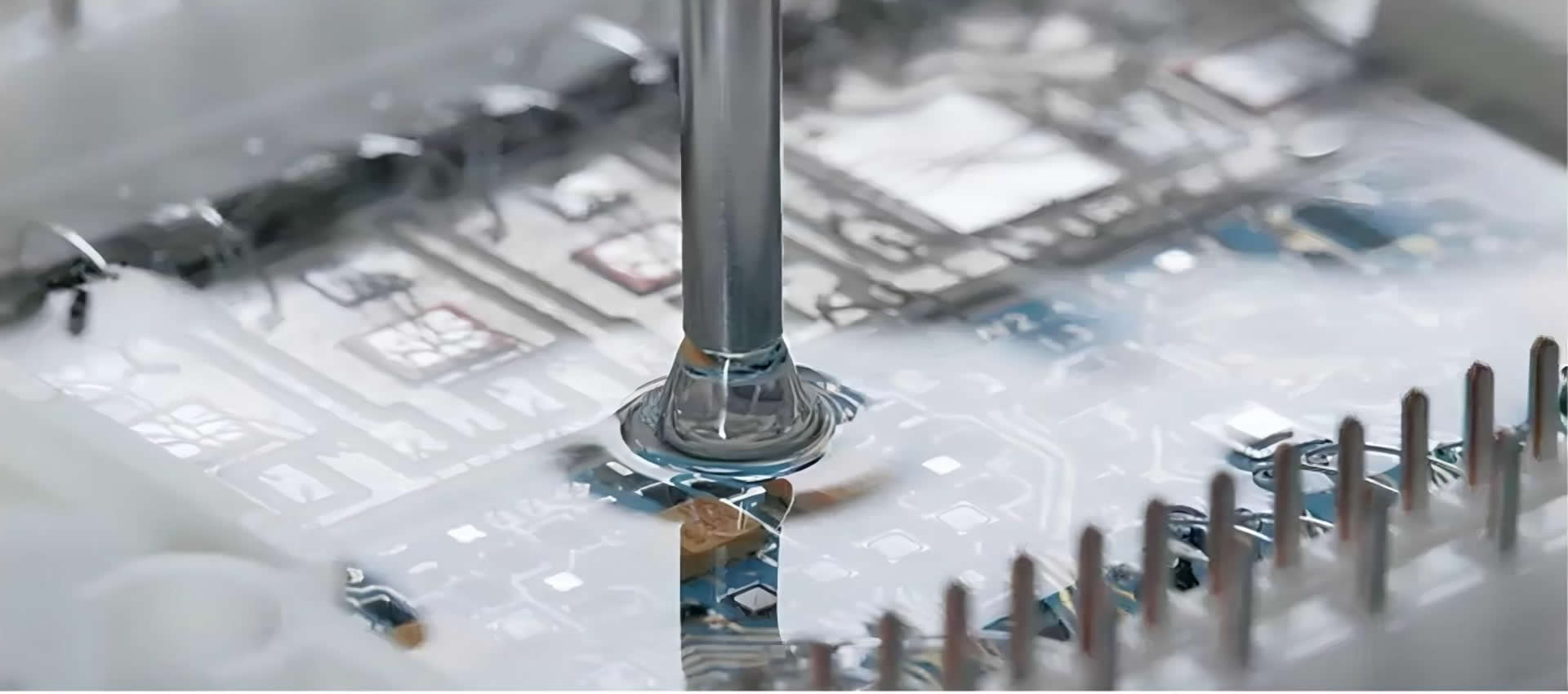
Vinyl Terminated Silicone Fluid
Everything you need to know about our products and company
In the rapidly evolving world of advanced materials, vinyl terminated silicone fluids have emerged as a transformative component in UV curing technology, particularly revolutionizing production timelines across multiple industries. These specialized silicone fluids, characterized by their reactive vinyl groups at the chain ends, serve as fundamental building blocks in ultraviolet curing applications where speed, efficiency, and performance are paramount. As manufacturing sectors increasingly seek faster production cycles without compromising quality, the unique properties of vinyl terminated polydimethylsiloxane offer an compelling solution that combines rapid curing capabilities with the exceptional properties of silicone chemistry .
The global market for these advanced materials reflects their growing importance, with significant expansion projected in the coming years as more industries recognize their transformative potential in accelerating manufacturing processes while maintaining exceptional material properties .
Vinyl terminated silicone fluids are essentially silicone polymers with reactive vinyl groups (-CH=CH₂) positioned at the molecular chain termini. This specific chemical architecture enables them to participate in rapid crosslinking reactions when exposed to UV light in the presence of photoinitiators. The vinyl groups undergo efficient photopolymerization through free radical mechanisms, allowing nearly instantaneous formation of three-dimensional networks .
The molecular weight of these fluids typically averages around 25,000, presenting as colorless liquids with notable resistance to water, heat, dirt, and dust. When polymerized, they create non-corrosive protective barriers that shield electronic components from moisture and contaminants. Unlike conventional curing systems that may emit volatile byproducts, UV curing with vinyl terminated silicone fluids produces no gaseous emissions, making them environmentally favorable options .
The curing process begins when photoinitiators in the formulation absorb UV radiation, generating reactive species that initiate the crosslinking of the vinyl groups. This click chemistry reaction proceeds rapidly and efficiently, often reaching complete curing within seconds rather than the hours required by traditional thermal curing methods. The resulting polymer network exhibits the excellent thermal stability, UV resistance, and flexibility characteristic of silicones, while also achieving the mechanical strength needed for demanding applications .
The most significant benefit of vinyl terminated silicone fluids in UV curing applications lies in their remarkable ability to compress production timelines. Traditional thermal curing processes often require extended heating cycles ranging from several minutes to hours, creating manufacturing bottlenecks. In contrast, UV curing with these specialized silicone fluids achieves complete crosslinking in seconds, dramatically increasing production throughput .
This accelerated curing translates directly to enhanced manufacturing efficiency and reduced energy consumption since prolonged heating is eliminated. Production facilities utilizing this technology can achieve faster cycle times, higher output volumes, and reduced work-in-progress inventory. The rapid curing also enables just-in-time manufacturing approaches, as parts can be moved immediately to subsequent assembly steps without post-curing delays .
Furthermore, UV curing systems offer superior process control compared to thermal alternatives. Manufacturers can precisely regulate the curing process by controlling UV exposure parameters, resulting in more consistent product quality and reduced rejection rates. The instant-on, instant-off capability of UV systems also eliminates the energy waste associated with maintaining thermal ovens at elevated temperatures when not processing parts .
Another significant advantage is the expanded design possibilities that rapid UV curing enables. Manufacturers can utilize heat-sensitive substrates that would degrade in thermal ovens, including certain plastics, optical fibers, and electronic components. This capability opens new avenues for product innovation across multiple sectors .
The global market for vinyl terminated polydimethylsiloxane demonstrates robust growth prospects, with projections indicating continued expansion through 2031. This growth is fueled by increasing adoption across diverse sectors including electronics, automotive, medical devices, and industrial manufacturing. The Asia-Pacific region represents the fastest-growing market, driven by expanding manufacturing capabilities and technological advancement in countries like China, Japan, and South Korea .
North American and European markets also show strong growth, particularly in high-value applications where precision manufacturing and material performance are critical. Major global manufacturers including GELEST, PCC, Milliken Chemical, and AB Specialty Silicones are expanding their production capabilities to meet rising demand, while also developing specialized grades tailored to specific industry requirements .
The market segmentation by viscosity ranges (below 500, 500-5000, and above 5000) indicates the material versatility across different application methods from spray coatings to liquid injection molding. High temperature vulcanized (HTV) silicone rubber and liquid silicone rubber (LSR) applications represent significant usage segments, with the latter experiencing particularly strong growth due to demand for precision components in medical and electronics sectors .
In the electronics sector, vinyl terminated silicone fluids have revolutionized LED packaging processes. Research demonstrates that UV-curable silicone resins based on vinyl terminated chemistry achieve superior performance compared to traditional thermal-curing encapsulants. These materials exhibit higher refractive indices (approximately 1.5651 compared to 1.5442 for conventional materials), resulting in significantly better light extraction efficiency .
The exceptional thermal stability of UV-cured silicone encapsulants protects sensitive LED chips from thermal degradation, while their excellent transparency maintains optical efficiency throughout the device lifespan. Accelerated aging tests show that LED devices packaged with advanced UV-curable silicones retain over 60% of their light output after 24 hours of sulfide exposure, significantly outperforming traditional materials .
Additionally, these materials provide superior protection against environmental factors, with water vapor transmission rates approximately 20% lower than conventional encapsulants, ensuring longer operational lifetimes for electronic components in challenging environments .
The medical industry has embraced UV-curable silicones for manufacturing disposable medical devices, where their rapid curing characteristics and biocompatibility offer distinct advantages. Specific formulations have been developed to meet stringent ISO 10993-5 cytotoxicity standards, ensuring patient safety in medical applications .
Medical-grade UV-curable silicones exhibit elongation properties ranging from 80% to 170%, with tensile strength between 725-870 psi, making them suitable for applications requiring flexibility and durability. These materials can be sterilized using various methods including gamma radiation, autoclaving, and ETO, maintaining their performance characteristics through sterilization cycles .
In transportation sectors, vinyl terminated silicone fluids enable the production of high-performance gaskets, seals, and protective coatings that withstand extreme environmental conditions. The cured materials maintain elasticity and sealing capability across temperature ranges from -60°C to 300°C, making them ideal for under-hood applications and aerospace components subject to dramatic temperature fluctuations .
The rapid curing capability allows automotive manufacturers to implement efficient in-line production processes for components such as sensor housings, wire harness coatings, and connector seals. The lightweight nature of silicone materials also contributes to weight reduction initiatives in both automotive and aerospace sectors .
The integration of vinyl terminated silicone fluids into UV-curable 3D printing resins represents a cutting-edge application that expands the possibilities of additive manufacturing. Recent research has demonstrated successful printing of silicone structures using LCD-based 3D printers with critical exposure parameters of approximately 4.431 mJ/cm² and curing depths of 0.5226 mm .
This technology enables the production of complex silicone geometries that would be impossible to manufacture using traditional methods, opening new possibilities in customized medical implants, soft robotics, and specialized seals. The ability to achieve fine feature resolution while maintaining the elastomeric properties of silicone makes this approach particularly valuable for prototyping and low-volume production .
The vinyl terminated silicone fluid landscape continues to evolve with ongoing research focusing on enhancing material properties and expanding application possibilities. Recent innovations include the development of dual-cure systems that combine immediate UV curing with secondary moisture-curing mechanisms. These advanced formulations address the challenge of curing in shadowed areas where UV light cannot directly penetrate, significantly expanding design possibilities .
Nanocomposite formulations represent another frontier, with researchers incorporating nanosilica and other functional fillers to enhance mechanical properties, thermal conductivity, or barrier performance. These advanced composites maintain the processing advantages of vinyl terminated silicone fluids while extending their performance characteristics for demanding applications .
There is also growing emphasis on developing more sustainable formulations, including solvent-free systems and bio-based raw materials. Manufacturers are increasingly focusing on circular economy principles, designing materials for easier recycling or reprocessing at end-of-life .
The integration of Industry 4.0 technologies with UV curing processes represents another significant trend. Smart curing systems with real-time monitoring and adaptive control algorithms optimize energy usage while ensuring consistent cure quality. These connected systems can automatically adjust UV intensity and exposure time based on material batch variations or environmental conditions, further enhancing manufacturing consistency .
As global demand for advanced UV-curable materials accelerates, Biyuan has positioned itself at the forefront of vinyl terminated silicone fluid technology through substantial investment in research and development. The company’s approach integrates material science with application engineering, developing customized solutions that address specific manufacturing challenges across diverse industries .
Biyuan’s product development strategy emphasizes not only material performance but also manufacturing efficiency gains for customers. Their latest generation of vinyl terminated silicone fluids achieves curing speeds up to 40% faster than conventional products, while maintaining the excellent mechanical and thermal properties that make silicones valuable across multiple sectors. This focus on accelerating production timelines directly addresses manufacturers’ needs for higher throughput without compromising quality .
The company’s technical expertise extends to developing specialized formulations for extreme environments, including high-temperature electronics, automotive under-hood applications, and aerospace components. These tailored solutions maintain performance across temperature ranges from -60°C to 300°C, ensuring reliability in the most demanding operating conditions .
Biyuan’s quality management system incorporates rigorous testing protocols that exceed industry standards, with particular emphasis on batch-to-batch consistency critical for automated manufacturing processes. Their technical support team works closely with customers to optimize material selection and processing parameters, ensuring maximum efficiency gains in production environments .
Looking toward the future, Biyuan continues to invest in next-generation vinyl terminated silicone technologies aligned with global sustainability and digitalization trends. Their development pipeline includes bio-based raw materials, energy-efficient curing formulations, and smart materials designed for Industry 4.0 manufacturing environments, positioning the company as a innovation leader in the advanced materials sector .
Vinyl terminated silicone fluids represent a significant advancement in UV curing technology, offering manufacturers across multiple industries the opportunity to dramatically accelerate production timelines while maintaining the exceptional material properties that make silicones valuable for demanding applications. As technology continues to evolve, these versatile materials will play an increasingly important role in enabling faster, more efficient manufacturing processes that meet the dual challenges of productivity and sustainability .
The ongoing innovation in vinyl terminated silicone fluid technology, exemplified by companies like Biyuan, ensures that manufacturers will continue to benefit from materials that not only meet current production challenges but also anticipate future needs in an increasingly competitive global market .
Our most popular products loved by customers worldwide
Vinyl termified silicone fluids represent a specialized class of medical-grade materials engineered for advanced healthcare applications. These reactive fluids feature terminal vinyl groups that enable precise molecular customization and controlled crosslinking capabilities, making them ideal for developing implantable devices, drug delivery systems, and d.
Vinyl silicone fluid is revolutionizing cosmetic and personal care formulations through its unique reactive properties and sensory enhancement capabilities. This functional silicone material features terminal vinyl groups that enable customizable cross-linking while maintaining the characteristic smoothness of silicone-based ingredients. Vinyl sili.
Vinyl silicone fluid, as a core functional silicone product, demonstrates exceptional versatility and reliability in the industrial additives sector. Its unique molecular structure combines the flexibility of a siloxane backbone with the reactivity of terminal vinyl groups, delivering customized solutions for various industrial applications. In polymer .
Vinyl terminated fluid is emerging as a transformative additive in textile and leather manufacturing, offering a unique combination of processing enhancement and performance optimization. This reactive silicone fluid leverages its terminal vinyl groups to create durable molecular bridges with fibers and leather substrates, delivering lasting functional ben.